Daily digest for CoinInformation - crypto news bitcoin ethereum ripple tron, on November 1, 2021
kyungho0128 posted: " Post Oak Motor Cars (POMC) and crypto custody firm NYDIG recently announced a partnership that enables the Houston-based auto dealer to sell vehicles through Bitcoin-backed loans.The partnership with the Bitcoin-focused financial services firm will give "
New post on CoinInformation - crypto news bitcoin ethereum ripple tron
Post Oak Motor Cars (POMC) and crypto custody firm NYDIG recently announced a partnership that enables the Houston-based auto dealer to sell vehicles through Bitcoin-backed loans.
The partnership with the Bitcoin-focused financial services firm will give POMC's customers access to a fully-fledged suite of Bitcoin (BTC) services, including custody and lending.
Integrating Bitcoin into company's business operations
"The collaboration will enable POMC to offer customers access to NYDIG's institutional-grade, 100% cold storage custody solution," read the announcement.
"The product does not require customers to make any interest payments during the life of the loan," according to the press release, which explained that customers who don't wish to sell their Bitcoin can access a portion of its value by borrowing USD, using Bitcoin as collateral.
Thanks to NYDIG's full-stack platform, the partnership will also enable POMC to use its appreciated Bitcoin treasury holdings to finance further expansion, and allow the company's employees to allocate a portion of their paychecks to Bitcoin.
At NYDIG, we're on a mission to safely unlock the power of Bitcoin. Our partnership with Post Oak Motor Cars will bring a unique opportunity for customers to buy luxury vehicles financed by Bitcoin and allow employees to auto-convert payroll to Bitcoin. https://t.co/pIsHmsBZljpic.twitter.com/MjclSwZbq9
"POMC will be leveraging NYDIG's platform to hold its appreciated Bitcoin treasury position and efficiently finance an expansion of POMC's footprint," the Houston-based auto dealer said.
In addition, POMC revealed that its new state-of-the-art location in The Woodlands, TX will count as the company's first Bitcoin-financed venture.
Rolls Royce Ghost purchase financed with Bitcoin
"In today's rapidly changing financial landscape, we are proud to partner with a firm like NYDIG to offer our customers the ability to finance a car with a loan secured by Bitcoin," said Lonny Soza, General Manager of POMC.
The press release also announced that POMC already sold its first luxury automobile financed with Bitcoin.
One of the POMC's customers made a Rolls Royce Ghost purchase, financed with Bitcoin held at NYDIG.
"This partnership marks an important milestone as we start to help Americans unlock the spending power of their Bitcoin through borrowing USD against it without selling their long-term Bitcoin holdings," commented Patrick Sells, Chief Innovation Officer at NYDIG.
Get an edge on the cryptoasset market
Access more crypto insights and context in every article as a paid member of CryptoSlate Edge.
Unsubscribe to no longer receive posts from CoinInformation - crypto news bitcoin ethereum ripple tron. Change your email settings at Manage Subscriptions.
kyungho0128 posted: "Bitcoin (BTC) appears to lack the strength to retest the $67,000 all-time high that it reached on Oct. 20 and this is causing investors to question whether or not the bullish moment has faded. Even with the price facing these hurdles, it's still premature"
New post on CoinInformation - crypto news bitcoin ethereum ripple tron
Bitcoin (BTC) appears to lack the strength to retest the $67,000 all-time high that it reached on Oct. 20 and this is causing investors to question whether or not the bullish moment has faded. Even with the price facing these hurdles, it's still premature to call the $58,000 support level test the beginning of a descending channel.
Bitcoin price in USD at Coinbase. Source: TradingView
Among the factors limiting the rally is the regulatory uncertainty in the United States. Anne Termine, a partner in the government enforcement and investigations practice at Bracewell LLP and former chief trial attorney at the Commodities Futures Trading Commission (CFTC), said that "there are no easy answers" for the agency to provide clear rules.
Increasing adoption, on the other hand, has been pressuring traditional banks to seek cryptocurrency product offerings. For example, major Russian private bank Tinkoff, owner of a large online brokerage services, is researching crypto-related investment services even though the Bank of Russia withholding such launches.
This week Coinbase exchange hit the top spot as the most downloaded app for the United Stated Apple Store, which is mind-blowing. Coinbase beat tech giants like TikTok, YouTube and Instagram and this is not a small feat. Coinbase first listed on the app store in 2014 and was the most popular download in the U.S. in 2017 and May 2021.
Pro traders stumbled but are bullish again
To determine how bullish or bearish professional traders are, one should monitor the futures premium — also known as the "basis rate."
The indicator measures the difference between longer-term futures contracts and the current price at spot market exchanges. A 5% to 15% annualized premium is expected in healthy markets, otherwise known as contango.
This price gap is caused by participants demanding more money to withhold settlement longer, and a red alert emerges whenever this indicator fades or turns negative, known as "backwardation."
Notice how the sharp decrease caused by the $58,000 resistance test on Oct. 27 caused the annualized futures premium to reach its lowest level in three weeks. Still, the indicator recovered nicely to the current 17%, signaling a moderate bullishness.
To confirm whether this movement was specific to that instrument, one should also analyze options markets.
The 25% delta skew compares similar call (buy) and put (sell) options and will turn positive when "fear" is prevalent. That situation reflects the protective put options costing higher than similar risk call options.
The opposite movement holds when market makers are bullish, causing the 25% delta skew indicator to shift to the negative area. Readings between negative 8% and positive 8% are usually deemed neutral.
The 25% delta skew has been ranging in the neutral zone since Sep. 30. The latest bottom on Oct. 25 was negative 6%, not enough to be considered moderate bullishness. However, not even Bitcoin's 12.5% correction from $66,600 on Oct. 21 to $58,200 on Oct. 28 was enough to inflict fear on professional traders.
Although no bearish signs emerged from the Bitcoin derivatives market, bulls should worry about the potential descending channel starting on Oct. 19. If that movement gets further confirmation, traders should expect $60,000 to become a resistance by Nov. 12.
There are no stress signs currently from professional traders, so a correction after a 63% rally in three weeks that led to the $67,000 all-time high on Oct. 20 should not be problematic.
The views and opinions expressed here are solely those of the author and do not necessarily reflect the views of Cointelegraph. Every investment and trading move involves risk. You should conduct your own research when making a decision.
Unsubscribe to no longer receive posts from CoinInformation - crypto news bitcoin ethereum ripple tron. Change your email settings at Manage Subscriptions.
kyungho0128 posted: "Bitcoin is witnessing modest profit-booking, but the long-term trend remains intact and altcoins like ETH, BNB, MATIC and FTM may remain in focus in the short term. Credit: Source link "
New post on CoinInformation - crypto news bitcoin ethereum ripple tron
Bitcoin is witnessing modest profit-booking, but the long-term trend remains intact and altcoins like ETH, BNB, MATIC and FTM may remain in focus in the short term.
Unsubscribe to no longer receive posts from CoinInformation - crypto news bitcoin ethereum ripple tron. Change your email settings at Manage Subscriptions.
kyungho0128 posted: "Cointelegraph is following the development of an entirely new blockchain from inception to mainnet and beyond through its series, Inside the Blockchain Developer's Mind. In previous parts, Andrew Levine of Koinos Group discussed some of the challenges the"
New post on CoinInformation - crypto news bitcoin ethereum ripple tron
Cointelegraph is following the development of an entirely new blockchain from inception to mainnet and beyond through its series, Inside the Blockchain Developer's Mind. In previous parts, Andrew Levine of Koinos Group discussed some of the challenges the team has faced since identifying the key issues they intend to solve and outlined three of the "crises" that are holding back blockchain adoption: upgradeability, scalability, and governance.
Blockchain testnets are an interesting subject because they come in all shapes and sizes. So, in this post, my goal is to leverage my inside experience as the CEO of Koinos Group (developers of Koinos) to demystify testnets and perhaps give some insight into why they seem to have such an impact on price.
The most obvious place to start is with the name: testnet. The purpose of a testnet is to test a network. At a very high level, there are two "flavors" of testnet. The first is a testnet that is released prior to a mainnet (main network), and the second is a testnet that is released after a mainnet is already in operation. The functions these serve are similar, but the context in which they are released dramatically impacts the perception, and impact, of the release.
I'll start with the second kind of testnet because, in a way, this is the more straightforward context. When you're talking about existing networks like Bitcoin and Ethereum, testnets serve two primary functions. The first is that they are a live environment in which developers can test their decentralized applications. Every good developer knows that there's no such thing as perfect code, so testnets give developers an environment that is very similar to the "main chain" (e.g. Ethereum) in which they can test their code with effectively zero risk. Things running on a testnet are expected to break, and the tokens used are expected to be worthless.
Related: London fork enters testnet on Ethereum as difficulty bomb sees delay
So, testnets are an environment that enables decentralized application (DApp) developers to increase the value of their applications (i.e., make their apps better) precisely because there is no expectation of full functionality or wealth creation. In a sense, the value of a testnet stems from its worthlessness.
DApp developers vs. blockchain developers
But testnets have a two-sided nature, which brings us to the second function that testnets serve, and that function is to the benefit of, not the DApp developer, but the platform developer (in our case, the blockchain developer). One thing I have been surprised to see from my unique perspective is how commonly DApp developers are conflated with blockchain developers. Typically, people who write smart contracts are not blockchain developers, and blockchain developers generally spend very little time writing smart contracts.
Ironically, Koinos is throwing a huge wrench in this distinction because its entire system is implemented as smart contracts! Since Koinos smart contracts are upgradeable, this means that any feature can be added to the blockchain without a hard fork, but it also means that the people developing the blockchain (like members of the Koinos Group) are using and developing the very same toolchain and toolkit that developers will use to build their DApps. But this is a feature that is totally unique to Koinos, so we can put that aside for the sake of this discussion.
In every other blockchain, the blockchain developers have to develop updates in whatever programming language the blockchain is written in (C++, Rust, Haskell, etc.), and they are working on a very large and complicated system called a "monolithic architecture." Within monolithic architectures, changing any part of the system can impact any other part of the system, so the risk of making changes is that much higher.
Blockchain developers also need a live environment with low stakes that they can use to test out their changes and see what breaks. Like application developers, they want this environment to be as close to the real network as possible, which means that they want their code to interact with code that application developers will be running as well.
Two sides of testnets
This reveals the two-sided aspect of testnets. They enable both the developers of applications and the developers of platforms to interact with one another and safely test their code in as close to a live environment as possible, but with very low stakes. This enables both groups to improve their products and make them more valuable to their users.
Now we can start to see why testnets seem to have such an impact on token price. If we assume that price is a function of value, and that testnets help developers increase the value of their products, then price impact should be expected. The problem is that this correlation has led to several undesirable outcomes. Projects will often release a "testnet" that has no utility to developers for the sole purpose of boosting their token price. Unfortunately, many people will see the testnet announcement and just assume that something valuable has been released, and so the act will have the desired effect on the price.
Testnets before mainnet
Up until now, I've been focusing on the utility of testnets in the context of existing blockchains, which is that they create a safe space for application developers to test their applications and for blockchain developers to test upgrades to the underlying platform. This will help you understand the other important context in which testnets are released, which is prior to the release of the mainnet.
Once again, testing is the primary objective, but the focus is far more on the system itself, as it has never before been operational. Of course, since it is new, there won't be any applications running on it anyway. Now the situation is more one-sided. The majority of the people working with the codebase will be blockchain developers, and the goal is to get the platform to a place where developers want to actually build on it.
The first requirement developers will have is that the platform is proven to be sufficiently safe, and that should be the prime directive behind the specific tests that are run. Assuming developers are convinced that the platform is sufficiently safe, then they'll need to be educated on how to use the platform. In other words, the testnet must be thought of as an educational tool that enables developers to gain a deeper understanding of how they will be able to use the platform while they are also helping to test the security of the network.
Finally, as they are testing the network and learning how to use it, they will inevitably find places where the platform could be improved — important libraries might be needed, or important documentation might be needed to help them understand the system. This information is invaluable feedback that the platform developers absolutely have to use to make the platform better before mainnet implementations are finalized.
Computer networks have become a major part of our lives whether we realize it or not, and they are only increasing in importance. Testnets are a critical step in the process of releasing new and innovative computer networks that can add ever-increasing value to our lives. Hopefully, by gaining a deeper understanding of the nuances of testnets and the important contexts in which they are released, you are now better equipped to evaluate specific testnet releases and whether they are being designed and launched for the right reasons.
This article does not contain investment advice or recommendations. Every investment and trading move involves risk, and readers should conduct their own research when making a decision.
The views, thoughts and opinions expressed here are the author's alone and do not necessarily reflect or represent the views and opinions of Cointelegraph.
Andrew Levine is the CEO of Koinos Group, where he and the former development team behind the Steem blockchain build blockchain-based solutions that empower people to take ownership and control over their digital selves. Their foundational product is Koinos, a high-performance blockchain built on an entirely new framework architected to give developers the features they need in order to deliver the user experiences necessary to spread blockchain adoption to the masses.
Koinos Group recently released version 2 of their testnet, which features stability improvements, their mana fee-less transactions system and a contract development toolkit that will allow developers to build and run smart contracts on Koinos.
Unsubscribe to no longer receive posts from CoinInformation - crypto news bitcoin ethereum ripple tron. Change your email settings at Manage Subscriptions.
kyungho0128 posted: "Retail traders test out the experience of buying, holding and selling a small amount of cryptocurrency on new platforms by placing different types of orders and seeing how they get filled – or not. While holding $100 worth of bitcoin can be bought just th"
New post on CoinInformation - crypto news bitcoin ethereum ripple tron
Retail traders test out the experience of buying, holding and selling a small amount of cryptocurrency on new platforms by placing different types of orders and seeing how they get filled – or not. While holding $100 worth of bitcoin can be bought just the same, if not more easily, than $100 of dogecoin or shiba inu, it may take newbies a little bit of time to wrap their heads around that concept. What's more, their experience with wild swings in meme coins will prime them for the volatile, though relatively "safer," major cryptos like bitcoin or ether.
Unsubscribe to no longer receive posts from CoinInformation - crypto news bitcoin ethereum ripple tron. Change your email settings at Manage Subscriptions.
kyungho0128 posted: " Amanda is the chief people officer at ConsenSys, a global community of developers, businesspeople, programmers, journalists, lawyers and others made to create and promote blockchain infrastructure and peer-to-peer applications. “My worst nightm"
New post on CoinInformation - crypto news bitcoin ethereum ripple tron
Amanda is the chief people officer at ConsenSys, a global community of developers, businesspeople, programmers, journalists, lawyers and others made to create and promote blockchain infrastructure and peer-to-peer applications.
“My worst nightmare is to wake up in five years and realize the crypto industry has become just like the ‘old Wall Street’ — an exclusive industry. The crypto ecosystem is a unique opportunity to build a more inclusive global financial ecosystem empowering more women and more minorities. And to build it, we need to have the most talented, diverse people to do it.
My fear is we fail to embrace this opportunity to make real, impactful, long-lasting change. Let’s not be scaredy-cats — let’s give everyone a pumpkin to talk about... Boo!”
Unsubscribe to no longer receive posts from CoinInformation - crypto news bitcoin ethereum ripple tron. Change your email settings at Manage Subscriptions.
kyungho0128 posted: "Bitcoin (BTC) delivered fresh retests of $60,000 support on Oct. 31 with a matter of hours left until the crucial monthly close.BTC/USD 1-hour candle chart (Bitstamp). Source: TradingViewRecord monthly close hangs by a threadData from Cointelegraph Market"
New post on CoinInformation - crypto news bitcoin ethereum ripple tron
Data from Cointelegraph Markets Pro and TradingView showed lackluster price action on Sunday, with BTC/USD below the "worst case scenario" for its October close.
Analysts were eagerly awaiting to see if the end of the month could provide a turnaround and prove the worst case theory correct for a third month running.
Its creator, PlanB, father of the stock-to-flow model, correctly guessed the $47,000 and $43,000 finales for August and September respectively.
Even without succeeding, however, finishing October above $60,000 would mark several achievements in itself.
If #Bitcoin closes the week tomorrow above $60k, it would be the 3rd week in a row...
It would also be the first *MONTHLY* close above $60k ever.
As Cointelegraph previously noted, Sundays have tended to see weaker performance from Bitcoin this month, with Monday contrasting the mood with a show of strength — particularly into the U.S. open.
"BTC daily says get ready for November," popular trader and analyst TechDev summarized on the day, putting the focus on the coming month.
Unsubscribe to no longer receive posts from CoinInformation - crypto news bitcoin ethereum ripple tron. Change your email settings at Manage Subscriptions.
kyungho0128 posted: "The 13th birthday of the Bitcoin (BTC) white paper has crept up just as the world continues to deal with a global pandemic, inflation fears, an astounding memecoin mania trend and growing institutional adoption of the cryptocurrency space.On October 31, 2"
New post on CoinInformation - crypto news bitcoin ethereum ripple tron
The 13th birthday of the Bitcoin (BTC) white paper has crept up just as the world continues to deal with a global pandemic, inflation fears, an astounding memecoin mania trend and growing institutional adoption of the cryptocurrency space.
On October 31, 2008, Satoshi Nakamoto released the Bitcoin white paper to a cryptography mailing list hosted by Metzdow. The Metzdow mailing list was run by a group of cypherpunks and was filled with ideas meant to create a form of digital currency: some of these have even been cited in the Bitcoin white paper.
Satoshi's white paper came in a message titled "Bitcoin P2P e-cash paper," in which Nakamoto explained that his digital currency is fully peer-to-peer (P2P) and requires no trusted third party for a transaction to occur. Through a peer-to-peer network, Bitcoin solved the double-spending problem. Bitcoin also allowed network participants to remain anonymous and was secured through a proof-of-work (PoW) consensus algorithm.
At the time, the white paper wasn't received the way people would expect it to be, knowing what they know today. Only a handful of people saw Nakamoto's email and replied with their thoughts and concerns surrounding Bitcoin.
Speaking to Cointelegraph, Leo Matchett, co-founder and CEO of Decentralized Pictures, a non-profit organization supporting independent filmmakers, said that the Bitcoin white paper "is the genesis of a new era in monetary sovereignty," adding, "Satoshi stood on the shoulders of giants and solved problems that those who came before could not."
Matchett opined further that the white paper "was truly the beginning of a new era for monetary systems of the world" because it "brought forth the idea that decentralization has more value than centralization." Indeed, the idea of Bitcoin attempted to solve numerous problems including counterfeiting, steep on-ramps and counterparty risk.
Running Bitcoin
After the white paper was shared on the cryptography mailing list, slowly but surely, discussion surrounding the document started growing, with the Bitcoin network being launched in early 2009. At that time, Hal Finney, a cypherpunk that worked with the PGP Corporation developing leading encryption products, was already involved.
Hal Finney is well-known in the cryptocurrency space for being involved in the first Bitcoin transaction and being the first person after Nakamoto to run a copy of the network through a node. After setting it up, Finney tweeted he was "running bitcoin."
The cypherpunk, who tragically passed away in 2014 as a result of ALS complications and had his body cryopreserved by the Alcor Life Extension Foundation, described his work with Satoshi in a forum post where he revealed he started mining BTC on "block 70-something," and that after some correspondence, Satoshi sent him 10 BTC to test whether the network worked.
At the time, there was no demand for space on the blockchain, so the transaction was successfully processed with a 0 BTC fee attached to it. The 10 BTC were worthless at the time, but the transaction helped fix some bugs in BTC's early days.
That first Bitcoin transaction made it clear that the network worked, and while there was still a lot of work to be done to get where it is today, it was a first step in the right direction. A year later, in 2010, the first commercial Bitcoin transaction would occur.
$600 million+ for two pizzas
On May 18, 2010 developer Laszlo Hanyecz created a post on the Bitcointalk forum offering 10,000 Bitcoin "for a couple of pizzas." Hanyecz offered to pay another forum member the coins if they got him two large pizzas, which could even be homemade.
The post was met with skepticism, as 10,000 BTC at the time weren't worth the cost of two pizzas, or were anywhere near it. Only on May 22, after a follow-up, did Hanyecz report that he "successfully traded 10,000 bitcoins for pizza."
At the time and despite Bitcoin's low value and the community's small size, one user noted that a "great milestone was reached." That day is now known in the cryptocurrency community as the "Bitcoin Pizza Day."
The first commercial Bitcoin transaction led to the creation of an ecosystem now worth over $2 trillion and proved that Bitcoin has a number of use cases that need to be considered. For the first time ever, Bitcoin was used as a true medium of exchange.
A multi-trillion dollar industry
The cryptocurrency's price would rise over time, partly because of adoption and partly because of speculators looking to profit off of its incredible volatility. In the midst of all that, new businesses were created in what ended up becoming a large asset class.
Speaking to Cointelegraph, Miha Grčar, head of global business development at cryptocurrency exchange Kraken, said: "no one could have predicted the tidal wave of change unleashed by the publication of a 9-page PDF."
The Bitcoin white paper, Grčar said, laid out a vision for a digital currency that can be used as a store of value and medium of exchange independent of centralized control. Per his words, the potential it has hasn't been fully unleashed:
"It turned out to be a breakthrough of such historical importance and magnitude that even thirteen years on, we're barely scratching the surface."
Bitcoin, he said, instigated a "paradigm shift that now underpins a multi-trillion dollar industry" and showed the world there was a better way where "sovereignty, finance and individual freedoms all co-exist outside the clutches of corrupt outdated socio-economic systems ridden with insiders, cronies and backroom deals."
As understood from the first commercial Bitcoin transaction, BTC's value hasn't always been clear. The cryptocurrency has gone through substantial crashes in its history and has been declared "dead" over 400 times by popular media outlets and analysts.
Bitcoin's market cap is now above $1.16 trillion, according to Cointelegraph Markets Pro. While most wish they could have heard about the cryptocurrency in 2010 or 2011 to invest in it and build up wealth through that investment, most would have likely failed to see how big BTC would get.
Early Bitcoin investor Greg Schoen published, in May 2011, a now-famous tweet where he showed regret for selling 1,700 BTC for $0.30, after getting them when the cryptocurrency was trading at $0.06, as he could have sold his coins at $8 apiece. As one BTC is now trading above $61,000, his 1,700 BTC would now be worth over $104 million. A pity indeed.
I wish I had kept my 1,700 BTC @ $0.06 instead of selling them at $0.30, now that they're $8.00! #bitcoin
Bitcoin's rise has been supported by a thriving industry filled with innovation that has already seen cryptocurrency exchanges start trading on the Nasdaq exchange and by institutional investors who recognize that BTC can be used to diversify their portfolios and hedge against inflation.
Earlier this year, El Salvador became the first country in the world to adopt Bitcoin as legal tender with the country's Bitcoin Law officially coming into effect on Sept. 7. El Salvadorans can use the cryptocurrency through a wallet called Chivo launched by the government that uses the Lightning Network, a layer-two scaling solution.
Speaking to Cointelegraph, Javier Moro, chief product officer at Latin American cryptocurrency exchange Bitso, noted that El Salvador's move was "rooted in hope for a better future for El Salvadorans," and its success will depend on the spread of cryptocurrency-related knowledge in the country.
More is yet to come
Earlier in October, the first Bitcoin exchange-traded fund (ETF) was launched in the United States. The ProShares Bitcoin Strategy ETF began trading under the ticker BITO on the New York Stock Exchange. It became the second-most heavily traded fund on record in its debut.
In a statement sent to Cointelegraph, Ron Levy, CEO and co-founder of blockchain consulting firm The Crypto Company, stated that the Bitcoin white paper "laid the groundwork for what would become a decentralized industry beyond what anyone thought was possible."
The next leap in this space, he said, are "clear laws and regulations around what can and can't be done with crypto currency." But, it's obviously not clear how that may turn out, as all new technological breakthroughs face resistance from established mechanisms.
Brittany Laughlin, executive director at the Stacks Foundation, which bridges decentralized finance (DeFi) and the Bitcoin network, told Cointelegraph that Bitcoin has come a long way from just being a store of value, as it's "now possible to build smart contracts on Bitcoin, welcoming the millions of BTC holders to the world of DeFi, NFTs and true ownership."
Notably, Satoshi Nakamoto seemingly predicted that additional blockchains could use tokens, which they called "domain objects" at the time, to represent ownership of assets. Satoshi's example was for a token representing the right to own a domain for a year.
Finney: "Satoshi, are you endorsing the idea that additional block chains would each create their own flavor of coins, which would trade with bitcoins on exchanges?"
Satoshi: "Right...domain objects (domaincoins?) could represent the right to own a domain for a year." pic.twitter.com/ZZBUwV65pS
As Grčar said, humankind has only begun scratching the surface of what Bitcoin and blockchain technology are capable of. So much so, that the developments we have today were seemingly thought of by Bitcoin's creator, Satoshi Nakamoto.
The Bitcoin white paper has made the idea of a decentralized network viable and proved that even a short nine-page document was able to change the world in ways so radical they may be hard to comprehend even at this point in time.
While it isn't clear whether more countries will adopt BTC as legal tender in the future, or whether interest for Bitcoin ETFs will wane, it appears clear that Bitcoin is here to stay and serve as both a store of value and medium of exchange, and that's only 13 years after the idea was first introduced. Imagine what will happen in the next 13 years.
Unsubscribe to no longer receive posts from CoinInformation - crypto news bitcoin ethereum ripple tron. Change your email settings at Manage Subscriptions.
kyungho0128 posted: "We ask the buidlers in the blockchain and cryptocurrency sector for their thoughts on the industry… and we throw in a few random zingers to keep them on their toes! This week, our 6 Questions go to Yoni Assia, the co-founder and CEO of eToro.Yoni Assia is"
New post on CoinInformation - crypto news bitcoin ethereum ripple tron
We ask the buidlers in the blockchain and cryptocurrency sector for their thoughts on the industry… and we throw in a few random zingers to keep them on their toes!
This week, our 6 Questions go to Yoni Assia, the co-founder and CEO of eToro.
Yoni Assia is the co-founder and CEO of eToro, the social investing network with over 23 million registered users from more than 100 countries. Yoni is widely acknowledged as a crypto pioneer, having co-written the Colored Coins white paper with Ethereum creator Vitalik Buterin in 2013. In 2018, Yoni founded GoodDollar, a nonprofit initiative created to develop a sustainable and scalable framework for bringing a digital, universal basic income to the world via new crypto asset technologies. He has long been a champion of different approaches to wealth and capital distribution, initially introducing the GoodDollar concept in a white paper called The Visible Hand in 2008. Yoni holds a BA in Management and Computer Science, and an MSc in Computer Science from the Reichman University (IDC Herzliya), Israel.
1 — What kind of consolidation do you expect to see in the crypto industry in 2021?
We're nearly at the end of 2021 and what a year it has been for crypto, with many coins reaching new ATHs, the launch of a Bitcoin ETF in the United States, and growing demand for crypto from both retail and institutional investors. We've seen more and more traditional companies embrace crypto and the blockchain technology that underpins it, and this will only continue.
This year has been about continued growth and the mainstreaming of crypto but, as the industry matures, we will see consolidation. Ultimately, I am hugely optimistic about the outlook for crypto — blockchain technology will revolutionize finance.
2 — Which is sillier: $500k Bitcoin, or $0 Bitcoin? Why?
$0 Bitcoin (BTC), easily. I bought my first Bitcoin in 2010, and 11 years later I'm still investing in Bitcoin and running a company that makes it easier for others to do so too. Crypto is still a nascent asset class and Bitcoin, the first and largest crypto, is only 12 years old. It may take some time to hit $500,000, but the future is bright for BTC and crypto more broadly.
3 — Which people do you find most inspiring, most interesting, and most fun in this space?
I have to mention my eToro team. I'm lucky enough to work with some of the smartest, most dedicated and inspiring people in the industry.
Looking beyond eToro, I recently attended the Milken Institute Global Conference. The event brought together many of the brightest and most influential minds in the world to discuss the most urgent challenges facing us globally. Entitled "Charting a New Course," the conference focused on how recent disruptions can be "reframed" for a "thriving future." I left feeling deeply inspired and even more determined to push forward with GoodDollar — a digital blockchain project which aims to make universal income a reality on a global scale. The income gap is a crisis of global proportions, and GoodDollar's goal is to onboard the next 100 million people into the digital economy.
4 — What's the most interesting place you've ever visited?
In 2020, I was fortunate enough to have dinner with Warren Buffett in Omaha, Nebraska. It was an honor to meet one of my heroes and a life changing moment for me. The two key takeaways for me were:
Investing can be simple when you invest in businesses you understand and believe in. If you follow the rules of value investing over a long period of time, you can succeed as an investor.
The most important investment you can make is in yourself.
5 — Which two superpowers would you most want to have, and how would you combine them for good… or evil?
I'm going to cheat and name three. I've always said I would want to be able to teleport, heal and have the ability to shake someone's hand and know everything they know. I'm all about using power for good.
6 — Choose the single most memorable moment from your favorite movie.
For me, it would be the scene from The Matrix (1999), directed by the Wachowskis, when the main character, Neo, has to choose between a red pill and a blue pill.
Unsubscribe to no longer receive posts from CoinInformation - crypto news bitcoin ethereum ripple tron. Change your email settings at Manage Subscriptions.
kyungho0128 posted: "This episode is sponsored by NYDIG.Download this episodeThis week's "Long Reads Sunday" is a reading of EY Global Blockchain Lead Paul Brody's latest essay for CoinDesk: "We Are Already Living in a Post-Scarcity World."See also: MicroStrategy CEO Michael "
New post on CoinInformation - crypto news bitcoin ethereum ripple tron
This week's "Long Reads Sunday" is a reading of EY Global Blockchain Lead Paul Brody's latest essay for CoinDesk: "We Are Already Living in a Post-Scarcity World."
See also: MicroStrategy CEO Michael Saylor's 17,732 BTC Holdings Now Worth $1.1B
"The Breakdown" is written, produced by and features Nathaniel Whittemore aka NLW, with editing by Rob Mitchell, research by Scott Hill and additional production support by Eleanor Pahl. Adam B. Levine is our executive producer and our theme music is "Countdown" by Neon Beach. The music you heard today behind our sponsor is "Dark Crazed Cap" by Isaac Joel. Image credit: Nuthawut Somsuk/iStock/Getty Images Plus, modified by CoinDesk.
Unsubscribe to no longer receive posts from CoinInformation - crypto news bitcoin ethereum ripple tron. Change your email settings at Manage Subscriptions.
kyungho0128 posted: "An average American taxpayer received three rounds of stimulus checks from the United States government as a means to reignite the economy by increasing consumers' spending potential. For many, this meant an opportunity to invest in Bitcoin (BTC).A Cointe"
New post on CoinInformation - crypto news bitcoin ethereum ripple tron
An average American taxpayer received three rounds of stimulus checks from the United States government as a means to reignite the economy by increasing consumers' spending potential. For many, this meant an opportunity to invest in Bitcoin (BTC).
A Cointelegraph report from Aug. 26 shows that 11% of the respondents between the ages of 18 to 34 reinvested a part of their stimulus checks into cryptocurrencies. Adult Americans that reinvested the first round of stimulus payments from April 2020 into Bitcoin have realized a net profit of roughly 442%, turning a $1,200 investment into $5,304 as of Oct. 31, 2021.
The second stimulus check of $600 was distributed between December 2020 and January 2021, just two months before Bitcoin achieved an all-time high of $65,000 for the first time. If reinvested in Bitcoin, the second check would return a profit of 152% (approximately $312).
The average payout for the third stimulus check was set at $1,400, which was made available for eligible taxpayers from March 2021. Since then, Bitcoin underwent a three-month-long bearish market but made a full recovery to cross $65,000 in trading value for the first time. Despite the fluctuations, reinvesting the third stimulus check in Bitcoin would return a modest 7% or $98 in profit at the time of writing.
Based on the findings above, a timely reinvestment of $3,200 worth of stimulus checks into Bitcoin would return a total profit of $4,514 (nearly 71%) by the end of October. In a study conducted by Harris Poll on behalf of Yahoo Finance, most Americans willing to invest in cryptocurrencies cited primary interest in Bitcoin and Ether (ETH).
Crypto analyst PlanB's prediction on Bitcoin checks out for the third consecutive month.
According to PlanB, Bitcoin is set to exceed $98,000 in value by the end of November. If the prediction holds true, the stimulus check investments will further realize 58% profit from today's market price.
Related: El Salvador buys a smokin' hot 420 more Bitcoin
El Salvador announced Bitcoin as a legal tender on Sep. 07 and has ever since started reinvesting its U.S. dollar reserves on procuring Bitcoin.
President Nayib Bukele announced the addition of 420 Bitcoin on Oct. 28, bringing up the national reserve to 1,120 BTC, worth $87.4 million.
According to Bukele, once the country makes a profit on its Bitcoin investment, an equivalent amount from its dollar reserves is reinvested for funding various initiatives. As a result, the total value of El Salvador's national reserves maintains its original value in terms of the US dollar.
Unsubscribe to no longer receive posts from CoinInformation - crypto news bitcoin ethereum ripple tron. Change your email settings at Manage Subscriptions.
kyungho0128 posted: " Source: Adobe/georgemuresanThe legacy financial system and its political representatives regard crypto as a threat to its hegemony."The majority of perception is due to misunderstanding a funda"
New post on CoinInformation - crypto news bitcoin ethereum ripple tron
The legacy financial system and its political representatives regard crypto as a threat to its hegemony.
"The majority of perception is due to misunderstanding a fundamentally new and innovative class of technologies."
"The best investment that can be made would be around education."
Few of us are strangers to double standards, particularly those to which Bitcoin (BTC) and cryptocurrencies, in general, are often subjected. Whether we're talking about environmental impacts or money laundering, crypto often appears to be held to an unfair, higher standard than the legacy financial system, at least when it comes to coverage in the mainstream media or statements by officials.
According to industry players speaking with Cryptonews.com, this is for a variety of reasons, yet two are worth highlighting in particular. First, the legacy financial system and its political representatives regard crypto as a threat to its hegemony, while secondly, the sheer novelty of crypto simply means that many figures within the established order find it strange and unfamiliar.
However, while we continue to see Bitcoin and crypto receive unequal treatment in various areas, most industry participants are hopeful that the situation will change over time. Because the more cryptocurrency is adopted, and the more crypto-related education is provided, the less the emerging sector will suffer from double standards and unfair treatment.
Crime and manipulation
"One of the most egregious examples of double standards within the media narrative around blockchain technology is that it's fundamentally a technology used for nefarious purposes. More specifically, cryptocurrencies are often condemned as a tool that enables money laundering, when in reality, the distributed ledger technology and blockchains that power cryptocurrencies are transparent public ledgers logging all activity pseudonymously," said Cooper Kunz, the Chief Technology Officer at social marketplace Calaxy.
Indeed, the industry sees this all the time, with headlines reporting on how, for example, the European Central Bank's Christine Lagarde has flagged up Bitcoin's use in money laundering. We also regularly see banks refusing to facilitate transfers to and from crypto exchanges, ostensibly because such exchanges are a hive of illicit activity.
Of course, studies from Chainalysis have revealed that criminal activity accounted for only 0.34% of all crypto-related transaction volume (or USD 10bn) in 2020, down from2.1% in 2019. Meanwhile, the United Nationsreports that money laundering volumes (in fiat currencies) currently stand at USD 1.6trn per year, or 2.7% of global GDP.
Other industry figures highlight this inequality in treatment, with GuardianCircle founder Mark Jeffrey noting that when crime is committed on a transparent blockchain, it's actually significantly easier to trace and track down the perpetrator.
"Some of the biggest recent pedo ring takedowns were only possible because the perps were stupid enough to use Bitcoin [e.g. in 2019, in 2021]. And in DeFi, some of the largest thefts were quickly returned once the thief realized there was no way to cash out to fiat without getting busted," he told Cryptonews.com
And yet, this false image of 'shadowy super coders' is spread by people like US Senator Elizabeth Warren, Jeffrey added.
"These people and mechanisms are the most transparent and open in history -- far more so than the dark banking world Warren protects."
Continuing on from this, Jeffrey suggests that probably the worst example of double standards affecting crypto is the ongoing US Securities and Exchange Commission (SEC)refusal to approve an exchange-traded fund backed by a "physical" BTC.
"There is no question this should have happened long before now -- the SEC is clearly blocking it for reasons other than 'protecting investors' -- it seems they are protecting big banks from healthy competition," he said.
Jeffrey notes that SEC Commissioner Hester Peirce agrees with the suspicion that crypto isn't being treated fairly, having said the following in July:
"I thought that if we had applied our standards as we have applied them to other products, we would already have approved one or more of them. With each passing day, the rationale that we have used in the past for not approving seems to grow weaker."
The rationale in question -- that the bitcoin market is subject to manipulation -- isn't something that's applied as forcefully to the stock market. Indeed, with the likes of Elon Musk manipulating Tesla's stock price with false 'going private' tweets, and with the SEC charging stock traders for multimillion dollar manipulation schemes almost every year, it's clear that crypto isn't the only area of finance with a manipulation problem.
Environmental impact
Next up is the environment, where Bitcoin and crypto also suffer from unfair treatment and criticism.
"The most prominent example of this phenomenon is probably the discussion around the energy consumption and carbon emissions created by blockchains based on proof-of-work models, where highly misleading comparisons are drawn between certain applications of an emerging technology and countries or industry sectors," argued Jan Stockhausen, Chief Legal Architect at decentralized insurance platform Etherisc.
According to him, this isn't comparing apples with apples and it's unfair to measure this one technology with such a yardstick while not doing likewise with any other sectors or technologies.
Similarly, you may have encountered a recent paper on Bitcoin's apparent e-waste problem, with the cryptocurrency's network of miners producing around 30 kilotons (or 30,000 metric tons) of electronic waste (e.g. discarded mining units) per year. This may sound horrendously bad, but note that according to the UN's Global E-waste Monitor 2020 report, the world generated some 53.6 million metric tons of e-waste in 2019.
Put differently, Bitcoin accounts for around 0.056% of the world's e-waste.
Opposition, ignorance, unfamiliarity
When asked to explain why Bitcoin and crypto tend to suffer from unequal treatment, industry players tend to coalesce around the same couple of reasons.
"One factor is that central banks simply view crypto as a threat to the traditional financial system, and as such, negative sentiments stemming from these legacy institutions are unsurprising," said Alexander Filatov, Cofounder and CEO at TON Labs.
Most commentators working within crypto agree with this observation, with Spectre.ai Managing Director Kay Khemani noting the increased democratization and decentralization of capital that cryptoassets will help bring about will likely result in a loss of control and power for the current powers that be.
"This perhaps instills a feeling of dread amongst the proverbial flag bearers, who work so hard to defend today's status quo," he told Cryptonews.com.
For Mark Jeffrey, the fear of losing (some) power and authority often combines with issues related to age, with older generations -- typified by "Yellen, Warren and their ilk" -- arguably unable to understand concepts of digital ownership. Yet he also notes that the crypto industry presents the legacy financial system with a real commercial rival, one that could really dent the banks' bottom lines.
"When Coinbase tried to launch Lend, it would have provided 5% annual interest. That's 100x what most banks provide today. There was a very real threat that vast sums would be pulled out of old school banks and into Coinbase -- it was a no-brainer. This would have hollowed out the banks," he said.
Hence, the SEC threatened Coinbase with a lawsuit, and Coinbase dutifully canned the planned product.
What can be done?
Given that the current financial system is the globe's de facto center of power, and that it views crypto as a real threat, what can the cryptoasset industry actually do to change the current situation and avoid unequal treatment in the future?
"Keep doing what it's doing. Keep growing. Keep getting more people invested and shouting at their representatives to allow crypto to flourish," said Mark Jeffrey, adding that crypto will ultimately flourish despite ongoing attempts to stifle it via regulation.
Continued growth will probably be the biggest factor in improving crypto's reputation and treatment, but another key ingredient will also be education. This is what Cooper Kunz suggests, adding that it will take time for the environment to change in crypto's favor.
He concludes, "I think the majority of perception is due to misunderstanding a fundamentally new and innovative class of technologies -- so the best investment that can be made would be around education. It is important to consider how long it took the public to truly understand new technologies such as the internet, and how it would impact their lives."
____ Learn more: - How Bitcoin & Crypto Might Help Ease Wealth Inequality (Without Miracles) - Pro-Crypto Congressman Blasts SEC's Gensler Over Regulation Plans
- Pandora Papers Expose How World Elite Uses Legacy Finance To Hide Fortunes - How Countries Use Digital ID to Exclude Vulnerable People
- Argentina's President Calls Crypto a 'Hard Currency' that Can Fight Inflation - Want To Fix Financial Literacy? Focus on Billionaires & Politicians
Unsubscribe to no longer receive posts from CoinInformation - crypto news bitcoin ethereum ripple tron. Change your email settings at Manage Subscriptions.
kyungho0128 posted: " This month, the IOHK team, headed by Charles Hoskinson, has been in Africa meeting entrepreneurs and politicians in a bid to further the Cardano cause.In doing so, Hoskinson and the team "dropped by" Ethiopia's Ministry of Education for a follow-up on th"
New post on CoinInformation - crypto news bitcoin ethereum ripple tron
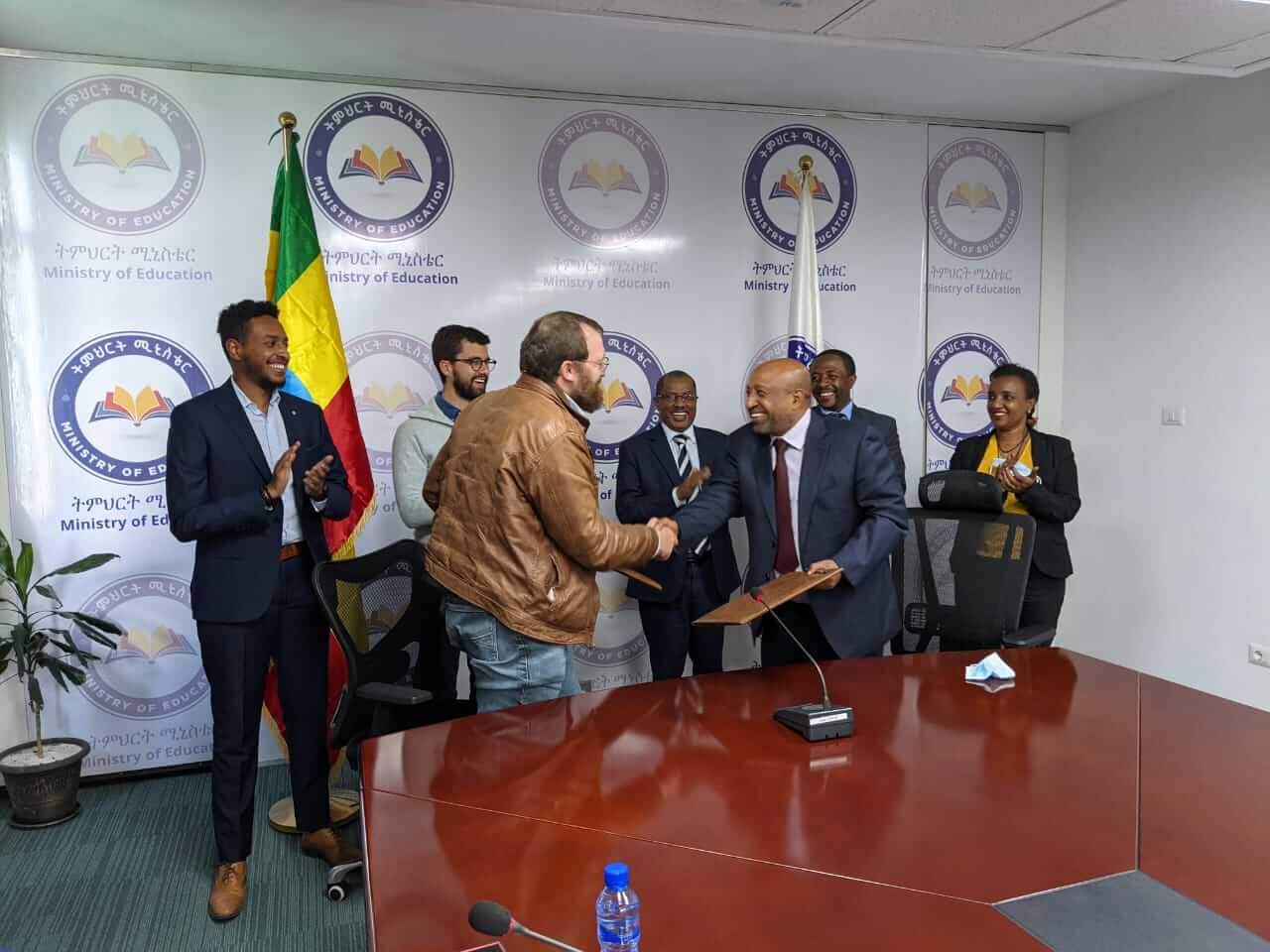
This month, the IOHK team, headed by Charles Hoskinson, has been in Africa meeting entrepreneurs and politicians in a bid to further the Cardano cause.
In doing so, Hoskinson and the team "dropped by" Ethiopia's Ministry of Education for a follow-up on the student credential system first mentioned in August.
"Dropped by the MOE today to discuss the digital transformation of Ethiopia's educational credentials. Five million students on schedule."
The credential system set out to overhaul the academic records of 5 million students by putting information, such as attendance and grades, on the blockchain to capture the data and provide a digital identity system.
Hoskinson told Bloomberg that this is the initial phase of the program. Later on, the intention is to use it as a springboard to launch a national ID system in the country. This would see a step up in numbers to 110 million users.
"It's our intention to compete amongst others for the whole national ID system, which is about 110 million people."
Cardano is making a splash on the global stage
The Cardano Atala Prism project in Ethiopia was ranked the 14th (out of 50) most influential project in 2021 by the Project Management Institute (PMI).
"As the largest blockchain deal ever signed by a government, the project is demonstrating how crypto assets can help drive positive socioeconomic change across Africa and beyond."
The PMI described the project as a gamechanger, which has the potential to improve the educational outcomes of Ethiopian students.
IOHK's Director of African Operations, John O'Conner, said there was initial resistance against the project at the governmental level. But the state started to realize that digital identity and blockchain technology are not as disruptive as first thought.
O'Conner said Atala Prism enables governments to meet their obligations of administering documentation while also making headway towards further digitalization.
The Africa play explained
Cardano's presence in Africa has been called into question on numerous occasions. But Hoskinson has responded by shutting down any skepticism, saying the region has great promise.
More specifically, in explaining why IOHK is in Africa, a recent blog post gives insight into the strategy behind the move.
It states that Africa has "no allegiances to the systems of the past," which, in any case, haven't "worked out so well here." As such, the entire infrastructure is up for grabs in terms of implementing better, more egalitarian ways of doing things.
"You don't go where the ball is right now. You go to where the ball is going to be."
With that, by positioning itself now, Cardano is set to ride the wave of progress as Africa gains greater significance on the global stage.
Get an edge on the cryptoasset market
Access more crypto insights and context in every article as a paid member of CryptoSlate Edge.
Unsubscribe to no longer receive posts from CoinInformation - crypto news bitcoin ethereum ripple tron. Change your email settings at Manage Subscriptions.
kyungho0128 posted: "Marcus Carter, Senior Lecturer in Digital Cultures, SOAR Fellow, University of Sydney, and Ben Egliston, Postdoctoral research fellow, Digital Media Research Centre, Queensland University of Technology. Facebook chief executive Mark Zuckerberg has announc"
New post on CoinInformation - crypto news bitcoin ethereum ripple tron
Marcus Carter, Senior Lecturer in Digital Cultures, SOAR Fellow, University of Sydney, and Ben Egliston, Postdoctoral research fellow, Digital Media Research Centre, Queensland University of Technology.
Facebook chief executive Mark Zuckerberg has announced the company will change its name to Meta, saying the move reflects the fact the company is now much broader than just the social media platform (which will still be called Facebook).
The rebrand follows several months of intensifying discourse by Zuckerberg and the company more broadly on the metaverse – the idea of integrating real and digital worlds ever more seamlessly, using technologies such as virtual reality (VR) and augmented reality (AR).
Zuckerberg said he hoped the metaverse will be a new ecosystem that will create millions of jobs for content creators.
But is this just a shallow PR exercise, with Zuckerberg trying to reset the Facebook brand after several scandal-ridden years, or is it a genuine bid to set the company on course for what he sees as the future of computing?
Facebook's journey into the metaverse
What's not in contention is that this is the culmination of seven years of corporate acquisitions, investments and research that kicked off with Facebook's acquisition of VR headset company Oculus for USD 2bn in 2014.
Oculus had risen to prominence with a lucrative Kickstarter campaign, and many of its backers were angry that their support for the "future of gaming" had been co-opted by Silicon Valley.
While gamers fretted that Facebook would give them VR versions of Farmville rather than the hardcore content they envisioned, cynics viewed the purchase as part of a spending spree after Facebook's USD 16bn stock market launch, or simply Zuckerberg indulging a personal interest in gaming.
Under Facebook, Oculus has gone on to dominate the VR market with over 60% market share. That's thanks to heavy cross-subsidisation from Facebook's advertising business and a console-like approach with the mobile "Quest" VR headset.
Delegates at a 2018 Facebook developer conference get to grips with the Oculus Go headset.Marcio Jose Sanchez/AP
Beyond Oculus, Facebook has invested heavily in VR and AR. Organized under the umbrella of Facebook Reality Labs, there are nearly 10,000 people working on these technologies – almost 20% of Facebook's workforce. Last week, Facebook announced plans to hire another 10,000 developers in the European Union to work on its metaverse computing platform.
While much of its work remains behind closed doors, Facebook Reality Labs' publicised projects include Project Aria, which seeks to create live 3D maps of public spaces, and the recently released Ray-Ban Stories – Facebook-integrated sunglasses with 5-megapixel cameras and voice control.
Read more: Ray-Ban Stories let you wear Facebook on your face. But why would you want to?
All these investments and projects are steps towards the infrastructure for Zuckerbeg's vision of the metaverse. As he said earlier in the year:
I think it really makes sense for us to invest deeply to help shape what I think is going to be the next major computing platform.
Why does Facebook want to rule the metaverse?
The metaverse may eventually come to define how we work, learn and socialise. This means VR and AR would move beyond their current niche uses, and become everyday technologies on which we will all depend.
We can guess at Facebook's vision for the metaverse by looking to its existing approach to social media. It has moulded our online lives into a gigantic revenue stream based on power, control and surveillance, fuelled by our data.
VR and AR headsets collect enormous amounts of data about the user and their environment. This is one of the key ethical issues around these emerging technologies, and presumably one of the chief attractions for Facebook in owning and developing them.
Read more: Facebook's virtual reality push is about data, not gaming
What makes this particularly concerning is that the way you move your body is so unique that VR data can be used to identify you, rather like a fingerprint. That means everything you do in VR could potentially be traced back to your individual identity. For Facebook – a digital advertising empire built on tracking our data – it's a tantalizing prospect.
Facebook is aiming to shape the metaverse in much the same way it gained a stranglehold on the social media economy.Tony Avelar/AP
Alongside Project Aria, Facebook launched its Responsible Innovation Principles, and recently pledged USD 50m to "build the metaverse responsibly".
But, as Catherine D'Ignazio and Lauren Klein note in their book Data Feminism, responsible innovation is often focused on individualized concepts of harm, rather than addressing the structural power imbalances baked into technologies such as social media.
In our studies of Facebook's Oculus Imaginary (Facebook's vision for how it will use Oculus technology) and its changes over time to Oculus' privacy and data policies, we suggest Facebook publicly frames privacy in VR as a question of individual privacy (over which users can have control) versus surveillance and data harvesting (over which we don't).
Critics have derided Facebook's announcements as "privacy theatre" and corporate spin. Digital rights advocacy group Access Now, which participated in a Facebook AR privacy "design jam" in 2020 and urged Facebook to prioritize alerting bystanders they were being recorded by Ray-Ban Stories, says its recommendation was ignored.
Is the internet a blueprint for an open metaverse?
Appropriately enough, the metaverse under Facebook is likely to resemble the term's literary origins, coined in Neal Stephenson's 1992 novel Snow Crash to describe an exploitative, corporatized, hierarchical virtual space.
But it doesn't have to be this way. Tony Parisi, one of the early pioneers of VR, argues we already have a blueprint for a non-dystopian metaverse. He says we should look back to the original, pre-corporatized vision of the internet, which embodied "an open, collaborative and consensus-driven way to develop technologies and tools".
Facebook's rebrand, its dominance in the VR market, its seeming desire to hire every VR and AR developer in Europe, and its dozens of corporate acquisitions – all this sounds less like true collaboration and consensus, and more like an attempt to control the next frontier of computing.
We let Facebook rule the world of social media. We shouldn't let it rule the metaverse.
This article is republished from The Conversation under a Creative Commons license. Read the original article.
Unsubscribe to no longer receive posts from CoinInformation - crypto news bitcoin ethereum ripple tron. Change your email settings at Manage Subscriptions.
kyungho0128 posted: "The iconic Bitcoin (BTC) white paper celebrates thirteen years of financial disruption after being first published on Oct. 31, 2008, by an anonymous person or entity named Satoshi Nakamoto.The white paper, titled Bitcoin: A Peer-to-Peer Electronic Cash Sy"
New post on CoinInformation - crypto news bitcoin ethereum ripple tron
The iconic Bitcoin (BTC) white paper celebrates thirteen years of financial disruption after being first published on Oct. 31, 2008, by an anonymous person or entity named Satoshi Nakamoto.
The white paper, titled Bitcoin: A Peer-to-Peer Electronic Cash System, foresaw the need for a peer-to-peer online payment system that is self-governing, secure and limited in quantity. The Bitcoin network was launched on Jan. 03, 2009, having each Bitcoin priced at $0.0008.
While Bitcoin was initially perceived as a threat by traditional financial institutions, thirteen years of community support and a growing user base have made Bitcoin one of the most profitable investments for the Internet age. Today, Bitcoin maintains a stable trading value well above $60k after experiencing a gradual appreciation of 7,749,999,900% ever since its launch.
The Bitcoin white paper proposes a solution to prevent double-spending without the risk of trusting a third party. To do this, it mentions the use of 'honest' nodes that confirm transactions by overpowering the bad actors in terms of raw central processing unit (CPU) power of computers.
Interestingly enough, the Bitcoin white paper has 15 'honest' and one 'dishonest' mentions, explaining the need for honest nodes to ensure the credibility of each transaction. In the words of Satoshi Nakamoto:
"We have proposed a system for electronic transactions without relying on trust. They [honest nodes] vote with their CPU power, expressing their acceptance of valid blocks by working on extending them and rejecting invalid blocks by refusing to work on them."
The Bitcoin blockchain has mined block number 707542, which offered a mining reward of 6.25000000 BTC.
As the Bitcoin ecosystem slowly approaches its hard cap or maximum supply of 21 million BTC, the developer community will need to modify the existing rules to incentivize the miners that confirm Bitcoin transactions on the blockchain. The white paper suggests:
"Any needed rules and incentives can be enforced with this consensus mechanism."
Prominent entrepreneurs from Crypto Twitter such as Anthony Pompliano join in on the celebrations.
Tomorrow is the 13 year anniversary of the Bitcoin Whitepaper.
We are officially launching Bitcoin Pizza in 20 cities with almost 100 locations.
Despite the ongoing resistance from numerous governments and authorities such as China, this year marks the beginning of Bitcoin's legacy as a legal tender in El Salvador. The long-term effect of Bitcoin on El Salvador's inflated economy will determine the asset's mainstream adoption among other jurisdictions.
Related: Crypto is impossible to destroy, says Tesla CEO Elon Musk
The success of Bitcoin and the crypto ecosystems as viable investments continue to attract investors from all walks of life. The world's richest man, Tesla CEO Elon Musk, recently showed support for cryptocurrencies at the Code Conference in California:
"It is not possible to, I think, destroy crypto, but it is possible for governments to slow down its advancement."
Musk also believes that "cryptocurrency is fundamentally aimed at reducing the power of a centralized government," which can be one of the main reasons for Bitcoin's slow mainstream adoption rate.
Unsubscribe to no longer receive posts from CoinInformation - crypto news bitcoin ethereum ripple tron. Change your email settings at Manage Subscriptions.
kyungho0128 posted: "Digital assets have recently become more and more prevalent in our daily lives — in the news, popular culture and our personal interactions. In the first quarter of 2021, the number of global daily Bitcoin (BTC) transactions hit 367,536. Bitcoin alone now"
New post on CoinInformation - crypto news bitcoin ethereum ripple tron
Digital assets have recently become more and more prevalent in our daily lives — in the news, popular culture and our personal interactions. In the first quarter of 2021, the number of global daily Bitcoin (BTC) transactions hit 367,536. Bitcoin alone now accounts for around $20 billion of daily online transactions. Not only this, but those who are familiar with digital assets and cryptocurrencies trust them implicitly — Binance's "Global Crypto User Index" for 2021 shows a 97% confidence in cryptocurrencies.
Proportionally, members of Latinx communities in the United States have some of the highest rates of crypto adoption, with approximately 31% of Hispanic people owning Bitcoin and the same data stating that 25% of Bitcoin owners are Latinx. There are many reasons behind this impressive rate of adoption, not least of which is the fact that this group has less access to traditional wealth. In 2016, Latinx families held less than one-sixth the wealth of white families and were several times more likely to support family members not living with them. In 2020, Mexican people living in the United States sent over $40 billion to family members in Mexico, and many of these transfers took place through cryptocurrency.
While Latinx communities seem to be at the forefront of adopting digital assets and using them to improve their daily lives, it is important that those in the cryptocurrency and digital asset industries make efforts to include marginalized groups in their future plans and to integrate with and embrace these communities, to continue on this upward trajectory of adoption and to ensure that everyone is aware of the wide range of benefits digital assets can provide.
Latin American adoption
It is only a matter of time before digital assets reach full proliferation in Latin America. For example, look at El Salvador's decision to become the world's first country to classify Bitcoin as legal tender. Citizens in El Salvador can now receive $30 worth of Bitcoin when they download and register on the government's cryptocurrency app, Chivo. Taxes can be paid in Bitcoin, and prices will be displayed in either BTC or U.S. dollars. A major driver of the law is to help people elsewhere in the world who are sending remittances back to El Salvador, as these payments generally suffer from high transaction and commission fees when done through fiat currency.
Related: What is really behind El Salvador's 'Bitcoin Law'? Experts answer
Argentina is following El Salvador's lead, with members of Argentina's National Congress recently submitting a bill that will allow Argentine people to accept their salaries in Bitcoin. Cuba, Paraguay and Uruguay have all indicated that they will officially recognize and regulate cryptocurrency in their countries in the immediate future. Leaders in Argentina, Brazil, Panama and beyond have endorsed El Salvador's action on social media.
Assisting migrants who are sending remittances to their family and friends in their countries of origin is just one example of how digital assets can empower people. Bill payment services via blockchain technology could also be life-changing for people in marginalized communities. Payments via blockchain are more secure, faster and often more cost-effective than traditional methods — and do not require access to traditional banking and payment channels. This is particularly significant, as a large number of those in marginalized communities do not have access to a bank account. While they make up only 32% of the U.S. population, Black and Latinx households represent 64% of its unbanked and 47% of its underbanked.
Overcoming barriers to entry
Those from marginalized communities have shown their tenacity and determination in how they have innovated and used these new technologies to their advantage, overcoming the limitations traditional finance has placed upon them. These groups are among the most familiar with crypto in the United States and are quick to adopt and use the technology.
It is now the role of the crypto industry, governments and organizations to reach out to marginalized communities and cater to them specifically, integrating with their communities and showing them how they can further benefit and change their day-to-day lives for the better. If enterprises and regulating bodies can learn about the cultures and traditions of these communities, they can understand their needs and can accommodate these requirements in a mutually beneficial way.
Two main barriers to digital asset adoption persist: a lack of understanding and concerns about security. To this end, education is key to further digital asset adoption — people need to understand the value of digital assets and how digital assets can serve them and their communities. Given that digital assets are still a relatively new concept, fear and lack of understanding are natural. It is difficult to comprehend how these new technologies can replace long-standing structures, such as traditional banks, and how this new technology can cater to them more effectively, safely and securely.
Related: Mass adoption of blockchain tech is possible, and education is the key
Digital assets use blockchain technology, which is generally considered to be one of the most secure options for transactions and payments; however, this may not initially be clear to those unfamiliar with the concept and concerned about the security of their money and payments. With the right understanding and educational initiatives, we can help adopters of cryptocurrencies to choose secure, regulated and licensed digital asset providers, so that they can transact with peace of mind.
Widespread crypto adoption is still in its early days, and many obstacles still exist. Strong government ties to traditional banking in many countries will drive skepticism of digital assets. Taking a top-down approach, it is imperative that governments and industry leaders reinforce this innovative, hugely beneficial technology. By creating a safe, regulated environment for crypto and facilitating healthy discourse and education on the topic, we can empower and transform citizens' lives even further.
This article does not contain investment advice or recommendations. Every investment and trading move involves risk, and readers should conduct their own research when making a decision.
The views, thoughts and opinions expressed here are the author's alone and do not necessarily reflect or represent the views and opinions of Cointelegraph.
Rodrigo Bezanilla is the Latin American business strategist at Coinsource. With over 25 years of experience as an investment and financial adviser, Rodrigo has an extensive professional background in cross-border relations between Mexico and the United States. As managing partner at the Tejas Opportunity Group, a cross-border private equity firm focused on social impact investments in Texas, Rodrigo lends his expertise to building opportunities for the Latin American community through strategic business alliances and private equity activities.
Unsubscribe to no longer receive posts from CoinInformation - crypto news bitcoin ethereum ripple tron. Change your email settings at Manage Subscriptions.
kyungho0128 posted: " Litecoin Market Re-bounces at $175 – October 28It recorded that the LTC/USD market re-bounces around $175 while a volatility motion took place during yesterday's sessions. Presently, the crypto's price worth trades around $188 at a percentage"
New post on CoinInformation - crypto news bitcoin ethereum ripple tron
Litecoin Market Re-bounces at $175 – October 28 It recorded that the LTC/USD market re-bounces around $175 while a volatility motion took place during yesterday's sessions. Presently, the crypto's price worth trades around $188 at a percentage rate of 5.20 positive. That signifies that the market embarks on a notable recovery process.
Market Re-bounces at $175: LTC Trade Key Levels: Resistance levels: $200, $225, $250 Support levels: $150, $125, $100LTC/USD – Daily Chart The LTC/USD daily chart has brought to the limelight that the crypto market re-bounces around the level of $175 after witnessing a significant drawdown during a volatile operation yesterday. It observed that the rebounding process came up short while the depression briefly went past the psychological value line. The 14-day SMA indicator is closely above the 50-day SMA indicator in the ranges of $200 and $150. The Stochastic Oscillators are positioned around the range of 20, seemingly trying to close the lines. That suggests that price may be settling to diverge from its course to the downside partially.
Should traders keep to range-bound trading techniques as the market re-bounces at $175?
It still appears that there is a need for traders to keep to range-bound trading techniques as the LTC/USD market re-bounces at $175, during yesterday's trading session at a higher range trading spot down to a lower zone to find support before reaching the lower range line at $150. Being as it is, the range-bound zones carry three differential lines as the mid-point is said to be the point firstly mentioned in this analytical article.
On the downside of the technical analysis, sellers may have to wait for price reactions at a higher range-trading zone before deciding the subsequent approach to apply. A reversal of the current rebounding price motion against $175 will potentially allow the market to revisit the lower range line.s
LTC/BTC Price Analysis
In comparison, the trending capability of Litecoin as placed side by side with Bitcoin's is still waxing at a higher-lower trading zone around the trend line of 14-day SMA. The 50-day SMA indicator is above the 14-day SMA indicator. The Stochastic Oscillators are slantingly positioned southbound from the overbought region briefly against the range of 80. That suggests that the duo-crypto market pair may still face a downward progression movement in the near time.
Looking to buy or trade Litecoin (LTC) now? Invest at eToro!
68% of retail investor accounts lose money when trading CFDs with this provider.
Unsubscribe to no longer receive posts from CoinInformation - crypto news bitcoin ethereum ripple tron. Change your email settings at Manage Subscriptions.



















No comments:
Post a Comment