Daily digest for CoinInformation - crypto news bitcoin ethereum ripple tron, on August 30, 2021
kyungho0128 posted: " Bitcoin Fluctuates in a Range as It Defends Critical Support – August 29, 2021 BTC/USD price has continued to retest the $50,000 resistance zone as it defends critical support. Today, BTC's price rallied to the high of $49,650 but was repelled. The crypt"
New post on CoinInformation - crypto news bitcoin ethereum ripple tron
Bitcoin Fluctuates in a Range as It Defends Critical Support – August 29, 2021
BTC/USD price has continued to retest the $50,000 resistance zone as it defends critical support. Today, BTC's price rallied to the high of $49,650 but was repelled. The crypto dropped sharply to the low of $48,107 and resumed consolidation above it. The current support is holding as the crypto resumes a range-bound move above the current support.
Resistance Levels: $50,000, $51,000, $52,000 Support Levels: $40,000, $39,000, $38,000
BTC/USD – Daily Chart
Today, the Bitcoin price has dropped sharply above the $48,000 support. The implication is that buyers have the advantage to push BTC price to retest the $50,000 overhead resistance. Today, if the bears break below the $48,000 support, it will signal the resumption of the downtrend. Incidentally, the crypto is likely to be range-bound between $48,000 and $49,500 price levels. Bitcoin will resume an uptrend above $50,000 high if buyers break $49,500 resistance and the bullish momentum is sustained. However, repeated rejections at the overhead resistance will cause Bitcoin to decline below $48,000 support. The Relative Strength Index period 14 is at level 58. It indicates that Bitcoin has room to rally on the upside.
Bitcoin on-chain activity stays low despite price rally: Data
According to new data, cryptocurrency investors are not moving their holdings, despite BTC prices growing by 45% over the past 30 days. This has caused Bitcoin on-chain activity to drop after May 2021's crypto market crash. According to Bitcoin on-chain activity, such as the amount of entity-adjusted transactions, is yet to respond to the ongoing bullish action. It remains at historically low levels of between 175,000 and 200,000 daily transactions.
BTC/USD – 4 Hour Chart
Meanwhile, BTC's price is now consolidating above the $48,000 support as it defends critical support. Meanwhile, on August 28 uptrend; a retraced candle body tested the 61.8% Fibonacci retracement level. The retracement indicates that the BTC price will rise to level 1.618 Fibonacci extension or level $51,118.90.
Looking to buy or trade Bitcoin (BTC) now? Invest at eToro!
75% of retail investor accounts lose money when trading CFDs with this provider
Unsubscribe to no longer receive posts from CoinInformation - crypto news bitcoin ethereum ripple tron. Change your email settings at Manage Subscriptions.
kyungho0128 posted: "Enterprise adoption of blockchain technology is an important long-term goal of the cryptocurrency community because the integration of digital currencies with daily business activities will bring new users into the ecosystem and provide a boost to on-chai"
New post on CoinInformation - crypto news bitcoin ethereum ripple tron
Enterprise adoption of blockchain technology is an important long-term goal of the cryptocurrency community because the integration of digital currencies with daily business activities will bring new users into the ecosystem and provide a boost to on-chain activity.
One protocol that has been gaining traction on the enterprise adoption front is XinFin Network (XDC), an enterprise-ready hybrid blockchain solution specifically designed to optimize international trade and finance.
Data from Cointelegraph Markets Pro and TradingView shows that after hitting a low of $0.0673 on July 20, the price of XDC rallied 190% to establish a new all-time high at $0.1952 on Aug. 21.
XDC/USDT 4-hour chart. Source: TradingView
Three reasons for the growing momentum behind XinFin are the addition of the XDC Network to the global TFD Initiative, the release of the decentralized email solution LedgerMail and a growing ecosystem of partners and listing exchanges.
Adoption by a global trade network
One of the most significant developments for the XDC network was its addition to the global Trade Finance Distribution (TFD) Initiative, a consortium of trade originators, credit insurers, and institutional funders on a mission to boost automation and transparency in asset trading and risk distribution.
XinFin XDC Network - a network utility providing smart contract technology to produce cryptographic tokens - the First Blockchain Company to Join the Global TFD Initiative.https://t.co/NaOaRGuhOZpic.twitter.com/kTKEMmQfZp
According to André Casterman, the Chair of the Fintech Committee at International Trade and Forfaiting Association (ITFA), the addition of the XDC Network "enables the organization to bridge the $19 trillion trade finance asset class with any type of funder through tokenization and digital assets."
The significance of this integration for XinFin cannot be overstated because it partners them with some of the biggest global financial institutions and leading service providers like AIG, Santander Asset Management, ING Bank, the International Chamber of Commerce, Standard Bank, Commonwealth Bank of Australia, Texel Group and Lloyds Bank.
The overall goal of the TFD Initiative is to create a more robust trade finance ecosystem by defining new technology-based market practices and transaction data specifications to help increase the accessibility and transparency of trade flows.
LedgerMail becomes the world's first decentralized email solution
Another reason for XDC's surge came after the Aug. 4 release of LedgerMail, "the world's first decentralized email solution," which is powered by the XDC network.
According to the project's Twitter feed, its mission is to provide the "highest level of security, privacy, encryption and prevention from email attacks in a decentralized way."
Demand for the service got off to a hot start with the total number of signups surpassing 50,000 within the first week an new users also received 10 free XDC for signing up.
Partnerships and exchange listings
XDC adoption has also risen in recent weeks thanks in part to new partnerships for the network as well as several new exchange listings.
One of the bigger partnerships was its integration with Shopping.io, an e-commerce project that enables users to pay with cryptocurrencies for items on Amazon, eBay, Walmart and Etsy using. As an added perk, purchases made using XDC receive a 2% discount and users who also hold Shopping.io's native SPI token can receive an extra 12% off.
XDC also partnered with HAPI, an on-chain cybersecurity protocol for decentralized finance (DeFi) products that helps to increase security and help prevent hack attempts.
We are excited to announce that HAPI Protocol will be integrated on @XinFin_Official
XinFin's XDC Network is a leading hybrid blockchain protocol designed to support institutional use in asset tokenization and decentralized finance.
— HAPI | Onchain Cybersecurity Protocol for DeFi (@i_am_hapi_one) August 17, 2021
HAPI is a set of cross-chain smart contracts that are embedded into DeFi products and it allows them to reach a new security level.
Several recent exchange listings have also benefited XDC as increased access has led to increases in its 24-hour trading volume. These include its July 8 addition to SimpleSwap and a July 31 integration with Simplex.
The views and opinions expressed here are solely those of the author and do not necessarily reflect the views of Cointelegraph.com. Every investment and trading move involves risk, you should conduct your own research when making a decision.
Unsubscribe to no longer receive posts from CoinInformation - crypto news bitcoin ethereum ripple tron. Change your email settings at Manage Subscriptions.
kyungho0128 posted: " Litecoin Price Prediction – August 29 The Litecoin price prediction witnesses a drop today, amounting to a 0.93% loss with a current trading price of around $174. LTC/USD Market Key Levels: Resistance levels: $195, $205, $215 Support levels: $155, $145, "
New post on CoinInformation - crypto news bitcoin ethereum ripple tron
The Litecoin price prediction witnesses a drop today, amounting to a 0.93% loss with a current trading price of around $174.
LTC/USD Market
Key Levels:
Resistance levels: $195, $205, $215
Support levels: $155, $145, $135
LTCUSD – Daily Chart
After LTC/USD touches the daily high of $182.75, the coin is currently changing hands at $174.12, down with a 4% loss. However, the Litecoin price is likely to recover from the current market level to cross above the 9-day and 21-day moving averages, but the upside momentum is quite slow. Meanwhile, if the coin reclaims the positive momentum, it may continue to respect the channel pattern. If now, more breakdowns may likely play out in the market.
Litecoin Price Prediction: Litecoin (LTC) May Follow Downtrend
The Litecoin price is seen trading below the 9-day and 21-day moving averages. Therefore, a possible retracement above the moving averages could drag the price to the resistance level of $195, $205, and $215, creating a new monthly high. But if bears continue to move the market price downward, selling pressure may increase and further bearish movement may lead the coin to critical support at $170 and $150.
Meanwhile, as it appeared now, there's likely for a further retreat within the market and any additional movement towards the lower boundary of the channel may likely lead the coin to the critical supports at $155, $145, and $135 respectively. Similarly, the technical indicator Relative Strength Index (14) reveals that the signal line is moving below 55-level and this indicates that LTC/USD is moving averagely within the channel.
When compares with Bitcoin, the Litecoin price is following a sideways movement now as the coin moves below the 9-day and 21-day moving averages. However, if the bulls attempt to gain momentum, the Litecoin price may cross above the moving averages. Meanwhile, the technical indicator Relative Strength Index (14) may head to the north as the signal line remains above 40-level.
LTCBTC – Daily Chart
Moreover, if the Litecoin price decides to stay below the moving averages, LTC/BTC could significantly lower the price to 3200 SAT and below. On the contrary, in case of a rebound, the coin can trade past the resistance level of 3900 SAT above the channel before resuming the rally. Therefore, if the bulls manage to stay well above this barrier, traders could see the coin touching the resistance level of 4000 and above.
Looking to buy or trade Litecoin (LTC) now? Invest at eToro!
75% of retail investor accounts lose money when trading CFDs with this provider
Unsubscribe to no longer receive posts from CoinInformation - crypto news bitcoin ethereum ripple tron. Change your email settings at Manage Subscriptions.
kyungho0128 posted: "Bitcoin's consolidation near $50,000 reflects a steady market and this could attract buyers to altcoins like ADA, LUNA, VET and XTZ. Credit: Source link "
New post on CoinInformation - crypto news bitcoin ethereum ripple tron
Unsubscribe to no longer receive posts from CoinInformation - crypto news bitcoin ethereum ripple tron. Change your email settings at Manage Subscriptions.
kyungho0128 posted: " Bitcoin Cash Price Prediction – August 29 The Bitcoin Cash price prediction reveals that BCH is hovering above the moving averages as indicated by the technical indicator RSI (14). BCH/USD Market Key Levels: Resistance levels: $750, $800, $850 Support le"
New post on CoinInformation - crypto news bitcoin ethereum ripple tron
The Bitcoin Cash price prediction reveals that BCH is hovering above the moving averages as indicated by the technical indicator RSI (14).
BCH/USD Market
Key Levels:
Resistance levels: $750, $800, $850
Support levels: $550, $500, $450
BCHUSD – Daily Chart
BCH/USD peaks at $692 today, after which it couldn't maintain the trend as the price drops and consolidates around the 9-day 21-day moving averages. However, for the price not to reflect above the resistance level of $700 ruins the long-term technical picture of the coin. Therefore, the Bitcoin cash will have to move back to $700 to increase the buying pressure while the closest resistance expects the coin at $695, which could be the daily high.
Bitcoin Cash Price Prediction: Bitcoin Cash May Expand More
At the time of writing, the Bitcoin Cash is currently hovering above the 9-day and 21-day moving averages but a movement towards the south may likely push the coin to the support levels of $550, $500, and $450. From above, a sustained movement across the upper boundary of the channel may create momentum for the bulls with the focus to move the market to the next resistance levels of $750, $800, and $850 respectively.
At the time of writing, the technical indicator Relative Strength Index (14) signal line is moving to cross above 60-level, which indicates that BCH/USD may continue to trade bullishly. Meanwhile, looking at the daily chart, the 9-day MA must not cross below the 21-day MA for the buyers to concentrate on stirring action to the north.
When compares with BTC, following the trade for the past few days, bulls have shown a great commitment to BCH trading by following the recent positive sign. Furthermore, the current market trend may continue to go up if the buyers can sustain the pressure further.
BCHBTC – Daily Chart
However, if the bulls succeeded in pushing the coin above the upper boundary of the channel, the market price may likely reach the next resistance level of 1550 SAT and above. On the contrary, a retest could allow the pair to go below the 9-day and 21-day moving averages and lower the price to the support level of 1200 SAT and below. However, the technical indicator Relative Strength Index (14) is likely to cross above 50-level, suggesting additional bullish signals into the market.
Looking to buy or trade Bitcoin Cash (BCH) now? Invest at eToro!
75% of retail investor accounts lose money when trading CFDs with this provider
Unsubscribe to no longer receive posts from CoinInformation - crypto news bitcoin ethereum ripple tron. Change your email settings at Manage Subscriptions.
kyungho0128 posted: " Bitcoin Price Prediction – August 27 The Bitcoin price prediction is caught in the middle of a bull market as the coin rises to trade above the $47,000 resistance level. BTC/USD Long-term Trend: Bullish (Daily Chart) Key levels: Resistance Levels: $51,00"
New post on CoinInformation - crypto news bitcoin ethereum ripple tron
The Bitcoin price prediction is caught in the middle of a bull market as the coin rises to trade above the $47,000 resistance level.
BTC/USD Long-term Trend: Bullish (Daily Chart)
Key levels:
Resistance Levels: $51,000, $53,000, $55,000
Support Levels: $43,000, $41,000, $3,000
BTCUSD – Daily Chart
BTC/USD is currently on the rise as the recent move marks a breakthrough in the recently observed upward movement of the consolidation period, but it is important to note that the price of Bitcoin has not breached any major technical levels. Therefore, BTC/USD is trying to start the bullish move since the beginning of the European session but struggles to gain momentum as the uptrend across the market comes to a halt.
Bitcoin Price Prediction: Where Could BTC Go Next?
At the time of writing, the Bitcoin price is trading up 1.15% at its current price of $47,392 level. Moreover, as the resistance mounts, the positive movement towards $48,000 may likely come into focus and the next few days could reveal where Bitcoin (BTC) and other altcoins will trend for as the new month begins.
However, if the bulls push the price above the 9-day moving average, moving up further to cross the upper boundary of the channel could push the price above the next level which may likely touch the resistance levels of $51,000, $53,000, and $55,000. Similarly, the technical indicator Relative Strength Index (14) is likely to cross above 60-level, suggesting additional bullish signals into the market.
BTC/USD Medium – Term Trend: Ranging (4H Chart)
Looking at the 4-hour chart, BTC/USD is trading at $47,175 as all eyes are glued to the $48,000 resistance level. Presently, the Bitcoin price is seen moving above the 9-day moving average while the existing trend is still bearish. However, the buyers may need to push the price above the 21-day moving average for them to control the market but rapid price actions may likely play out.
BTCUSD – 4 Hour Chart
At the time of writing, the red-line of 9-day MA is still below the green-line of 21-day MA, and the coin may likely retest the support level of $45,500 and below if the price crosses below the lower boundary of the channel. Meanwhile, if the technical indicator Relative Strength Index (14) follows the upward movement above 50-level, BTC/USD may likely hit the resistance level of $49,500 and above.
Looking to buy or trade Bitcoin (BTC) now? Invest at eToro!
75% of retail investor accounts lose money when trading CFDs with this provider
Unsubscribe to no longer receive posts from CoinInformation - crypto news bitcoin ethereum ripple tron. Change your email settings at Manage Subscriptions.
kyungho0128 posted: "The heavy selling in the U.S. dollar market at the end of last week assisted Bitcoin (BTC) to climb above $49,000. However, BTC struggled to extend its climb above $50,000, a psychological resistance level, as investors remained cautious about the Federal"
New post on CoinInformation - crypto news bitcoin ethereum ripple tron
The heavy selling in the U.S. dollar market at the end of last week assisted Bitcoin (BTC) to climb above $49,000. However, BTC struggled to extend its climb above $50,000, a psychological resistance level, as investors remained cautious about the Federal Reserve's taper timing.
Bitcoin corrects after logging its week-to-date high of $49,667. Source: TradingView.com
In detail, the Fed chairman Jerome Powell delivered a mildly dovish outlook during his speech on Friday at the annual Jackson Hole symposium. At one point, he refrained from providing hints regarding when the Fed would start unwinding its $120 billion a month asset purchasing program.
Powell noted that they would begin tapering sometime by the end of 2021, albeit admitting that the fast-spreading Delta variant of the Covid-19 could play spoiler.
"We will be carefully assessing incoming data and the evolving risks," he said.
"Timing and pace of taper will not be intended to carry a direct signal regarding the timing of interest rate liftoff."
At the same time, the U.S. Bureau of Economic Analysis reported that annual Core Personal Consumption Expenditures (PCE) Price, which the Fed considers its preferred inflation metric, remained unchanged at 3.6%, about 1.6% higher than the central bank's intended target.
Things to focus on next week
The first half of the week has no major macroeconomic events that could directly or indirectly impact Bitcoin and the rest of the crypto market.
But on Sep. 1, the Automatic Data Processing (ADP) Research Institute will reveal August's private sector employment data. Additionally, investors will likely watch the ISM Manufacturing PMI for its Prices Paid component. In doing so, they could gauge input price pressures in the manufacturing sector to determine inflation.
On Friday, the Non-farm Payroll (NFP) data expects to show that the U.S. economy added 763,000 jobs in August, about 19% lower than July's print of 943,000. As a result, disappointing job data could delay the Fed's decision to taper its asset purchase program and help boost the price of risk assets, including Bitcoin.
Technical setup
Technically, Bitcoin has been trending inside a short-term ascending channel, hinting at a move towards the lower trendline (near $47,000) for a potential pullback towards the upper trendline (above $50,000).
An extended sell-off below the Channel's lower trendline could risk crashing the BTC/USD exchange rates towards the 200-4H exponential moving average (200-4H EMA; the yellow wave) at near $44,600.
Related: Bitcoin in line for 'phenomenal' weekly close if BTC price holds $49K
The downside target appears closer to the one visible on the weekly chart.
The BTC/USD exchange rate has been testing the 0.786-line (near $50,779) of the Fibonacci retracement graph following a 75.36% bullish move. As a result, an extended pullback move from the said price ceiling brings Bitcoin's next downside target near the 0.618-Fib line (around $43,886).
Conversely, a neutral RSI reading (below 70) may assist the bulls to reclaim $50,000 for a bullish breakout move. In doing so, they could target levels near $60,000 as their next upside target.
The views and opinions expressed here are solely those of the author and do not necessarily reflect the views of Cointelegraph.com. Every investment and trading move involves risk, you should conduct your own research when making a decision.
Unsubscribe to no longer receive posts from CoinInformation - crypto news bitcoin ethereum ripple tron. Change your email settings at Manage Subscriptions.
kyungho0128 posted: "On August 10, the United States Senate voted to pass a $1 trillion bill to revitalize America's infrastructure. From the standpoint of the crypto community, miners in particular, the Senate's foray into crypto legislation has been a disaster. Unless the l"
New post on CoinInformation - crypto news bitcoin ethereum ripple tron
On August 10, the United States Senate voted to pass a $1 trillion bill to revitalize America's infrastructure. From the standpoint of the crypto community, miners in particular, the Senate's foray into crypto legislation has been a disaster. Unless the language defining brokers in the bill is clarified, it will singlehandedly thwart the growth of a domestic industry just as it is taking off.
As written, the bill allows for multiple interpretations of the term "broker." In the English language, there is no real controversy — or ambiguity — about what a broker does. According to Merriam-Webster's online dictionary, a broker is "one who acts as an intermediary: such as […] an agent who negotiates contracts of purchase and sale (as of real estate, commodities, or securities)." In traditional finance, brokers purchase and sell financial assets, such as stock and bonds, for their clients. Compare this with miners of Bitcoin (BTC), the dominant cryptocurrency. In contrast to brokers, Bitcoin miners solve cryptographic puzzles to validate new blocks, an essential activity for the Bitcoin network to operate. The miners receive Bitcoin as compensation for providing this computation service. Thus, they definitively are not brokers.
Related: Let's be clear: Blockchain technology is infrastructure
Unfortunately, the bill passed by the Senate contains overly broad and ambiguous language in its definition of "broker":
"Any person who (for consideration) is responsible for regularly providing any service effectuating transfers of digital assets on behalf of another person."
A threat to the BTC mining industry
In defining a broker this way, the bill requires mining companies to provide the same information to regulators that a stockbroker is required to provide, such as taxable net gain or loss, identity of the buyer/seller, the amount of the transaction and the location of the transaction. Simply put, miners have no way to collect this information because they only validate the blocks, not the information inside them. As such, if miners are considered brokers under this language, they would not be able to comply with the law. This uncertainty, intentional or not, poses an existential threat to the U.S. Bitcoin mining industry.
Crypto mining is vital for the functionality of proof-of-work cryptocurrency networks, the most notable being Bitcoin. Without mining, many of the revolutionary aspects of blockchain technology would not be possible. For example, aspects such as decentralization, accountability, verification and security are all made possible through mining. Without mining, there is no Bitcoin network.
Currently, the U.S. crypto mining industry is expanding. Features such as a stable government, cheap energy, excess land and a strong economy have made the country an attractive location for crypto miners. Bitcoin adoption is increasing, both among individuals and companies — as adoption takes hold, the U.S. industry is growing employment for financial professionals, software developers, engineers, marketers and facilities managers.
Related: Broker licensing for US blockchain developers threatens jobs and diversity
Many Americans hold Bitcoin balances and many individuals globally use Bitcoin to transfer earnings and wealth to families in different countries. Citizens of the countries with mismanaged currencies are trusting the Bitcoin network to maintain their purchasing power in the face of rapidly depreciating currencies. In short, the United States is an important player in a rapidly growing market that provides value to millions of people. And this role is expanding as China, which does not trust the decentralized, market-based ethos of Bitcoin, has moved to shut down mining inside its borders.
Related: China crackdown shows industrial Bitcoin mining a problem for decentralization
The Senate bill snatches defeat from the jaws of victory. Just as U.S. crypto mining is set to expand exponentially, the uncertainty caused by the bill's ambiguous language is stymieing investment. At our company, we have experienced this firsthand. Employment, wages and resulting consumer spending have been put on hold because of the bill — a sad irony given that the purpose of the bill is to support economic growth and job creation.
Unless the language in the bill is changed to clarify that miners are not brokers, the United States will miss out on several benefits that crypto mining offers, such as grid stability, capitalization of stranded energy, and the repurposing of wasted energy. Crypto mining enhances grid stability by helping utilities balance supply and demand. Miners maximize profits when energy is cheap and plentiful, providing utilities revenues when prices are low. When energy demand increases and prices rise, crypto miners stop mining, which releases energy supplies to the grid and brings down prices for other users.
Crypto mining and energy consumption
The narrative that crypto mining wastes energy has it backwards. Crypto mining does not waste energy but, instead, makes use of energy that would otherwise be wasted. Energy producers do not finetune their output to perfectly match supply and demand. Energy is frequently produced and not used because of mismatched supply and demand, and/or is lost due to transmission over long distances.
Related: Green Bitcoin: The impact and importance of energy use for PoW
The most cost-effective miners are located close to the utility's power. The Bitcoin these miners "produce" does not create incremental demand for additional energy, but rather uses energy that would be produced anyway. Thus, in addition to providing investment and jobs to local economies, crypto miners promote a more robust grid, reduce energy waste and generate revenues that utilities can use to transition operations off of fossil fuels and into renewable energy sources.
There is still hope
Given these and other benefits, the Senate's broadside against crypto mining is both puzzling and deflating. But there is still a chance that the U.S. House of Representatives rectifies the unfortunate language. Although the proposed amendments to the Senate infrastructure bill were not adopted, the fact that it was offered at all demonstrates that there is some support for crypto mining in the Senate. The House of Representatives may pass a different infrastructure bill. If this happens, it is possible that House and Senate negotiators could produce a final bill clarifying that crypto miners are not brokers. This would be the best outcome for the industry and the economy.
Crypto mining is going to take place somewhere because demand for Bitcoin and other cryptocurrencies is increasing. It would be better for the U.S. economy and the environment if the crypto mining industry continues to expand domestically. The first step to making the U.S. a leader in crypto mining is to clarify that miners are not brokers. The failure to do so will have long-lasting ramifications, preventing the United States from becoming a leading player in this fast-growing industry.
This article does not contain investment advice or recommendations. Every investment and trading move involves risk, and readers should conduct their own research when making a decision.
The views, thoughts and opinions expressed here are the author's alone and do not necessarily reflect or represent the views and opinions of Cointelegraph.
William Szamosszegi is the CEO and founder of Sazmining Inc., a cryptocurrency mining developer and consulting firm, and host of Everything Crypto Mining: The Sazmining Podcast. He is bullish on Bitcoin's future as the dominant global digital reserve asset and believes Bitcoin is the solution for layer-one, sound money. William grew up in Maryland and studied psychology and management at Bucknell University. William spends his spare time working out, seeing friends and reading.
Unsubscribe to no longer receive posts from CoinInformation - crypto news bitcoin ethereum ripple tron. Change your email settings at Manage Subscriptions.
kyungho0128 posted: "The run-up in the Bitcoin (BTC) price toward $50,000 last week risks exhaustion due to a mismatch between the cryptocurrency's price and momentum trends.So it appears the Bitcoin's price and relative strength index (RSI) have been moving in the opposite d"
New post on CoinInformation - crypto news bitcoin ethereum ripple tron
The run-up in the Bitcoin (BTC) price toward $50,000 last week risks exhaustion due to a mismatch between the cryptocurrency's price and momentum trends.
So it appears the Bitcoin's price and relative strength index (RSI) have been moving in the opposite direction since late July. In doing so, even a strong push higher in the BTC/USD bids has coincided with lower peaks in momentum, suggesting that the pair's upside momentum is weakening out.
Bearish divergence
A normal RSI momentum tends to tail the price action. That said, it rises when the price rises and falls when the price drops. But in some cases, the RSI deviates from pursuing the price trends, leading to a so-called RSI divergence.
Technical analysts consider RSI divergence as a powerful signal to spot price reversals. For instance, a bullish divergence, wherein the price falls and RSI rises, prompts traders to buy the asset in anticipation of a rebound. Similarly, a bearish divergence—featuring rising prices and falling RSI—prompts traders to take profits at the top while expecting a pullback.
The Bitcoin daily chart below shows the cryptocurrency in bearish divergence.
The downside signal appears as Bitcoin struggles to break bullish above $50,000. As of Sunday, the benchmark cryptocurrency was trading at $48,387, or 4.19% lower from its three-month high of $50,505, achieved on Aug. 3, following a similar 72.36% upside boom.
Good morning!$BTC has broken the ltf bullish structure. Main target remains $38k as long as it stays below $50k
If it finally drops to that level, buy as much as you can
On the other hand, Bitcoin's daily RSI initially rallied in sync with prices but topped out on July 30, which was way ahead of price, hitting $50,505. Since July 30, the Bitcoin price formed a sequence of higher highs while RSI printed lower highs, suggesting a weakening upside momentum.
A similar bearish divergence between January and April 2021 was instrumental in predicting a Bitcoin price drop, as shown in the chart below.
Bitcoin price-RSI divergence from January-April 2021 period. Source: TradingView.com
Bullish indicators
The bearish divergence signal comes as Bitcoin holds strongly above $30,000, amidst anticipation that it would become a hedge of choice among accredited investors against inflationary pressures.
The perception has led many analysts, including investment researcher Lyn Alden and Fundstrat CEO Tom Lee, to predict a $100,000 valuation for the cryptocurrency in 2021.
On Friday, Bitcoin price shot upward by $1,500 in an hour after Federal Reserve Chairman Jerome Powell presented a pro-inflation, dovish policy outlook at this year's Jackson Hole symposium.
As a result, the biggest bullish indicator for Bitcoin remains the Fed's aggressive $120 billion a month asset purchase program, coupled with its near-zero interest rate policy.
Related: Bitcoin price stages a comeback as 3 indicators reflect BTC's strength
The strong fundamental has prompted technical analysts to envision a long-term uptrend in the Bitcoin market. Namely, independent market analyst Teddy Cleps presented a bullish outlook for the cryptocurrency, based on key wave support that acts as an accumulation area for traders.
Similarly, Ryan Clark, another market analyst, noted that Bitcoin has been merely consolidating below $50,000 just like when it was trading below $24,000 before the December 2020's bullish breakout.
Bitcoin under 50k level acting like when it was under the 24k level.
On the other hand, TraderXO noted that Bitcoin could still fall towards the $39,000-40,000 area but remained convinced that the cryptocurrency would log an attractive rebound from the lower range.
The analyst marked Bitcoin's all-time high near $65,000 as its long-term upside target.
The views and opinions expressed here are solely those of the author and do not necessarily reflect the views of Cointelegraph.com. Every investment and trading move involves risk, you should conduct your own research when making a decision.
Unsubscribe to no longer receive posts from CoinInformation - crypto news bitcoin ethereum ripple tron. Change your email settings at Manage Subscriptions.
kyungho0128 posted: " Ripple Price Prediction – August 27 Today, the Ripple price prediction has been unable to develop the upside momentum above $1.00 as the coin remains at the downside. XRP/USD Market Key Levels: Resistance levels: $1.25, $1.35, $1.45 Support levels: $0.90"
New post on CoinInformation - crypto news bitcoin ethereum ripple tron
Today, the Ripple price prediction has been unable to develop the upside momentum above $1.00 as the coin remains at the downside.
XRP/USD Market
Key Levels:
Resistance levels: $1.25, $1.35, $1.45
Support levels: $0.90, $0.80, $0.70
XRPUSD – Daily Chart
During the European session, XRP/USD trades above $1.13 but failed to hold the ground and retreated quickly towards $1.11. Nevertheless, the Ripple (XRP) has been following the downtrend for the past few days, XRP/USD now trades within the 9-day and 21-day moving averages but the sideways movement could limit its bullish movements.
Ripple Price Prediction: Price May Retrace Above $1.20
According to the daily chart, the Ripple price is seen hovering within the 9-day and 21-day MAs, and should the bulls manage to push the market price above this barrier; the coin may likely find the potential resistance levels at $1.25, $1.35, and $1.45. Therefore, if the Ripple price touches the negative side, it may experience a bearish movement.
However, it is likely for the Ripple price to hit the nearest support at $1.00 and a further drop could pull the market to $0.90, $0.80, and $0.70 supports. Meanwhile, the technical indicator Relative Strength Index (14) is slowly moving above 50-level, which may introduce more bullish signals into the market.
When compares with Bitcoin, the Ripple price is trading around the 21-day moving average. However, if the selling pressure increases, the bears may likely keep the Ripple price at the downside. Meanwhile, the technical indicator Relative Strength Index (14) is seen moving above 50-level as traders may likely see a positive move in the market soon.
XRPBTC – Daily Chart
Moreover, the market can as well expect close support at the 2100 SAT by sliding towards the lower boundary of the channel to hit the critical support of 2000 SAT and below. On the other hand, if a bullish move occurs and validates a break above the 9-day and 21-day moving averages; traders may confirm a bullish movement for the coin as it may locate the potential resistance level at 2700 SAT and above.
Looking to buy or trade Ripple (XRP) now? Invest at eToro!
75% of retail investor accounts lose money when trading CFDs with this provider
Unsubscribe to no longer receive posts from CoinInformation - crypto news bitcoin ethereum ripple tron. Change your email settings at Manage Subscriptions.
kyungho0128 posted: " Source: AdobeStock / BBbirdZ One common refrain you hear about crypto, at least from laypeople, is that it's too 'complicated,' 'hard to understand,' 'opaque.' On a technical level this view is understandable, yet it ignores the fact that what crypto"
New post on CoinInformation - crypto news bitcoin ethereum ripple tron
One common refrain you hear about crypto, at least from laypeople, is that it's too 'complicated,' 'hard to understand,' 'opaque.' On a technical level this view is understandable, yet it ignores the fact that what cryptocurrencies aim to replace/supplement - fiat currencies - are also more than a little complicated, hard to understand and opaque.
Sure, everyone knows how to spend a dollar or a euro, but very few people understand how the monetary system underlying the cash in their wallets actually works. One of the clearest examples of this comes from a 2014 survey conducted in the UK, which found that only 10% of MPs (i.e. the people responsible for making laws) knew that most money is created by commercial banks when issuing loans or credit, with 71% thinking that only the government or central bank has the power to issue new cash.
This highlights that, compared to the fiat monetary system, crypto isn't as hard to understand as you might think (at least not on an economic level). And according to a range of experts speaking with Cryptonews.com, fiat currency and crypto are comparable in at least one other way: fiat has no more 'fundamental' value than bitcoin (BTC) or other cryptocurrencies, with the value of both depending on demand and trust in equal measure.
Different Kinds of Complexity
You've no doubt come across some variation of the 'Bitcoin/crypto is too complicated' argument. Even ostensibly sympathetic observers such as Mark Cuban and John McAfee have made it in recent years, arguing that such over-complexity would hold crypto back from widespread adoption.
However, most proponents of this view conflate two different aspects of Bitcoin and cryptocurrency. Namely, they look at the technical complexity (i.e. the cryptographic, blockchain-based aspect) of Bitcoin and other coins, and assume that such complexity also crosses over to its macroeconomics.
This view is wrong though, as explained by Hanna Halaburda, an Associate Professor of Technology, Operations and Statistics at the NYU Stern School of Business.
"Cryptocurrencies and fiat money are complex in different ways. Fiat cash is simple to use (at least the modern type) because you see what you have and what you spend," she tells Cryptonews.com.
"In contrast, cryptocurrencies are mostly very straightforward in their monetary policy (issuing of new coins). But they are more complex to use - e.g., you need to remember passwords to your wallets; if you copy the address of the recipient wrong, the money can disappear, and there is nobody to call to fix it," she adds.
Indeed, Bitcoin's monetary system is extraordinarily easy to grasp: new BTC is issued with every new block (at a declining rate) until it reaches its maximum supply cap of 21 million mined bitcoins. That's it, whereas monetary policy in the United States or any other country or region is not only constantly changing, but composed of multiple layers of complexity (e.g. M0, M1, M2 and other kinds of money).
At the same time, most industry participants are confident that crypto's seemingly complex user interfaces and experiences will be made less complex over time.
"Just as technology evolved to make the Internet so easy to use that it went mainstream, crypto tech is evolving, on its way to mainstream adoption," says Lou Kerner, a partner at Blockchain Coinvestors and Head Crypto Analyst at Quantum Economics.
Kerner also points out that because of the openness and immutability of blockchain technology, cryptocurrency is extraordinarily transparent, in that we know exactly how many bitcoins have been minted so far. "We have no idea how much money was printed yesterday," he adds.
Philip Gradwell, the Chief Economics at Chainalysis, agrees on this point.
"It's a common misconception that cryptocurrency is opaque. In fact, it operates on public blockchain ledgers and is one of the most transparent forms of value transfer," he tells Cryptonews.com, while adding that it's the very transparency of cryptocurrency that enables research firms such as Chainalysis to exist in the first place.
It's also worth pointing out that, just because something is hard to understand (at least on a technical level), it doesn't mean people can't or won't want to use it.
"The legacy monetary system is incredibly difficult to understand. Most people don't have a clue how it works. But you don't need to understand how a Toyota works to drive it, and the same goes with the dollar bill or a yen banknote or a pound deposit," says crypto-economist JP Koning.
Fundamental Value?
Another common complaint about cryptocurrencies is that they lack fundamental value. This may be true, but much the same could be said for fiat currencies.
"Fiat money, by their very name, does not have any underlying, fundamental value. It is 'backed' by the policies of the government issuing it. And that has been an effective strategy for many fiat currencies," says Hanna Halaburda.
Halaburda adds that fiat currencies are seen as having fundamental value because they're necessary to pay taxes in a given country, so there will always be demand for it, at least around the tax paying period. But "aside from that, fiat money has value only because people believe that other people will believe in the near future that it has value," she adds.
Halaburda refers to bitcoin as the "ultimate fiat money (in the literal meaning of the phrase)," yet she disagrees with people who claim it has no fundamental value.
"Bitcoin and other cryptocurrencies provide a service that was not available before them - near-anonymous transactions online. In my opinion this is the fundamental value of Bitcoin," she says.
Lou Kerner also suggests that cryptocurrencies have at least as much fundamental value as fiat currencies, which in his view is precisely none.
"The value of fiat, and bitcoin, is decided based on supply and demand. There is nothing backing either," he says.
However, in the case of fiat currencies, the absence of a fundamental base of value is what will cause at least some of them to lose all value.
"Because they create more fiat until people decide it no longer has value. That's what bitcoin solves," Kerner says.
For Domenico Lombardia, the Director of the Global Economy Department at the Centre for International Governance Innovation in Canada, fiat currencies lack intrinsic value because they depend entirely on trust in the central bank and/or government issuing them.
"Different central banks generate varying degrees of trust. The latter is the highest in those systems where the rule of the law and the broader institutional framework in which a central bank operates meet the tightest standards," he tells Cryptonews.com.
Lombardia argues that, for any cryptocurrency to compete with a fiat, it has to develop a framework able to generate trust in the ordinary user. "Without some form of regulation and supervision, that cannot be achieved," he says.
But not everyone in crypto agrees that fiat currencies lack fundamental value, with JP Koning pointing out that the typical central bank generally buys assets when issuing new money.
"It can use those assets to repurchase every single unit of currency that it has issued, thus reinforcing the value of the currency. And if it requires extra help, the central bank can ask the national government for a shot of tax revenue to boost central bank coffers," he says.
Of course, this only covers base money (M0, or money held and issued by central banks), with the Bank of England noting in 2014 that bank deposits make up 97% of the money in circulation. It also noted that "bank deposits are mostly created by commercial banks themselves" in the form of loans, thereby implying that the only thing backing such money is the debt obligation to return it.
Users Interfaces
The fact that very few people are aware of this - that commercial banks create most of a nation's money supply - should hopefully reinforce the realisation that the fiat monetary system is at least as mysterious and as opaque as crypto.
Sure, cryptocurrencies are complicated on a technical level, but then so are the backend systems that underpin ATMs, mobile banking apps and so on. Such complexity doesn't stop fiat currencies from being used, and they also won't stop cryptocurrencies from being used in their turn, at least as soon as their user interfaces become easier to navigate.
____
Learn more: - Solving These 7 Challenges Would Accelerate Bitcoin Adoption - People Tell Cryptoverse to Fix These Things to Reach Bitcoin Mass Adoption
- Bitcoin Is More 'Public' Money than Central Bank-Issued Fiat Currencies - Prepare For 'Uncertain Future of Money' – US Intelligence Center
- Fiat Money Printer 'Goes BRRR,' Is It a Time To Sell All Cash For Bitcoin? - European Money Printer Goes Brrr Program Runs Into a Problem - British Money Printer Goes BRRR: Bank to Buy USD 125bn of Bonds
- Knowledge of Crypto on the Rise, Encouraging Investment - Survey - Honesty and Education Will Help Bitcoin Build Trust – Survey
- IMF Says Higher Rates Might Reduce Appetite for Risk. And Bitcoin? - How International Fiat Fund Hurts Cash-Strapped Countries (FYI, El Salvador)
Unsubscribe to no longer receive posts from CoinInformation - crypto news bitcoin ethereum ripple tron. Change your email settings at Manage Subscriptions.
kyungho0128 posted: "Digital wallets are software constructs that mimic physical wallets and provide the functionality of storing, using and categorizing payment instruments. The journey of digital wallets started with payments and morphed to other forms of stubs such as digi"
New post on CoinInformation - crypto news bitcoin ethereum ripple tron
Digital wallets are software constructs that mimic physical wallets and provide the functionality of storing, using and categorizing payment instruments. The journey of digital wallets started with payments and morphed to other forms of stubs such as digital passes, tickets and boarding passes. However, crypto wallets attempt to redefine the digital wallet landscape as something more than safe storage of payment and crypto instruments.
With more than 100 crypto wallets and growing, this sector in the cryptosphere is getting crowded and adding further complexity to an already fragmented blockchain and digital asset space. As I study this space and try to make sense of the complexity of new blockchains, layer-one protocols decentralized finance (DeFi) and nonfungible token (NFT) projects emerging with exponential growth, I think crypto wallets will be the next battlefront as the wars of layer-one protocols eventually cool down. The core issues of scale, security and speed of transaction processing and layer-two protocol consolidate and morph as layer-one superiority aims for processing efficiency and security. Crypto wallets will not only provide an avenue to gain wallet share but will also represent the battle for mind share.
Related: This time it's different: When DeFi meets NFTs
Today, most crypto wallets provide software constructs that, for the most part, provide the following services at a very basic level:
Store public and private keys;
Interact with various layer-one blockchains;
Send and receive crypto assets and cryptocurrencies;
Monitor balance.
Crypto wallets should be more than better key management
In my opinion, we need to broaden the definition of a crypto wallet and view it as an avenue to participate in the crypto economy. It can provide the wallet holder with a choice framework for participating in a regulated network that emphasizes digital identity and requires third-party validation, for example, Know Your Customer.
Related: Authorities are looking to close the gap on unhosted wallets
At the same time, it also can be part of emerging networks that preserve anonymity and emphasize the confidentiality and privacy preservation of the participants. This choice framework will enable the regulatory and compliance conversation, shifting towards the network and activities as opposed to individuals, just like the choice frameworks our current wallets provide at an analog level.
A wallet would be modeled to be an extension of our identity constructs within the current identity frameworks that are issued by authoritative agents (like a government-issued ID) to an evolving digital identity that represents our (credit) history, reputation and incentive-driven history. It would not only promote transparency and good behavior but also preserve privacy. The notion of identity is important because digital identity (which today is tied to every wallet and every network) is foundational technology to ensure the trade, trust and ownership of digital assets.
Related: Concerns around data privacy are rising, and blockchain is the solution
A wallet's ability to control participation and the choice framework for enabling users to choose wallet attributes will allow for a flexible design and encourage participation. These wallets are traditionally containers of all types of asset classes such as NFTs, DeFi assets, cryptocurrencies and crypto assets. In addition, they also contain existing payment instruments, stored value accounts and other forms of digital stubs, allowing participation and inclusion by a registration process for existing financial services platforms and both current and future blockchain and crypto-economic driven networks. The registration could involve either sharing crypto primitives, say a public key, or providing the wallet identified for traditional centralized platforms.
In the Web 3.0 era
The question we should be asking is how to design a crypto wallet that can be a conduit to a new decentralized internet (Web 3.0) and the entire cryptosphere, and replace and reform our relationship with current services and institutions.
The new design of these wallets should enable engagement in (crypto) economic activities — whether Web 3.0 or otherwise — for example, file storage, NFT custody and simply storing data or instruments that let a wallet serve as an account receptacle for all our earnings and engagements in the cryptosphere and existing institutions.
Related: How NFTs, DeFi and Web 3.0 are intertwined
Whereas website payment standards and web payments at World Wide Web Consortium (W3C) aim to define technology standards. MetaMask, although confined to Ethereum (layer-one protocol), provides an impressive view into what could be a clean way to provide a browser and wallet integration, known as a browlet. MetaMask has been doing this since early 2016 and now defines institutional access with MetaMask Institutional (MMI). Currently, the technology design of wallets focuses on layer-one or platform-specific wallets and key management, which is necessary for the durability and long-lasting growth of Web 3.0. With a model like MetaMask's, however, wallet provisioning can be a new business model.
Institutional context and considerations — An institutional wallet?
Exponential growth in digital assets and related ecosystems, such as decentralized finance, native crypto assets and NFTs, has not only given rise to massive innovation in technology and finance products but also attracted the attention of many innovators, technologists, investors and, more recently, institutional investors.
Related: Institutions appear bullish on crypto despite record Bitcoin outflows
While blockchain, as a distributed ledger infrastructure and transaction processing system, aims for efficiency for dematerialized assets (assets in a ledger entry), the emergence of crypto and digital assets changes the landscape and the participants, essentially altering the market infrastructure. Thus, it makes digital (and crypto) assets unique and differentiated due not only to inherent characteristics of the assets but also to the resulting changes in the digital (crypto) assets market infrastructure. Digital (crypto) assets are generally bearer assets, and the claim to these assets is generally governed by a public-private key infrastructure. Digital assets are bearer assets, raising implications for trading and safeguarding, and surfacing considerations for institutional asset managers looking to allocate capital to a digital asset fund.
The notion of a wallet in an institutional context has a few more nuances and considerations that include (but are not limited to):
Know Your Customer/Know Your Transaction requirements.
Asset allocation and token deployments.
Interaction with crypto-custody services and service providers.
Collateral management and lending.
Liquidity management and treasury considerations.
Unlike traditional finance with a unique institutional market infrastructure, specialized asset classes, dematerialized assets, licensed gating criteria and much more — the core constructs of digital assets like DeFi tokens, tradable NFTs, cryptocurrencies of layer-one protocol and so on — do not significantly differ for institutional investors. The dematerialized assets, centralized security depositories (CSDs), collateralized lending and trading models for traditional finance are not the same in DeFi and other emerging asset classes. The issue and emergence of institutional-grade custody solutions, digital asset trading desks, etc., apply the systemic traditional finance apparatus and risk models to tame a fast-growing technology and crypto-economic led ecosystem.
The issues from an institutional perspective are scale, risk and alignment with traditional organizational controls and governance. For instance, the institutional situation around digital asset custody is similar to the traditional service provided by a custodian bank, which is the physical possession of financial assets on behalf of a client. Despite being conceptually similar, however, the practice of digital asset custody requires significant considerations about technology design. It is also necessary to pay attention to business and transaction considerations such as liquidity, treasury and collateral management, as well as fostering a deeper understanding of an evolving regulatory and compliance framework for digital assets, which may represent diverse asset classes.
Applying the traditional finance lens not only adds a cost component but also puts institutional investors at a disadvantage. This makes a case for using wallets in an institutional context to address the nuances discussed previously.
Perhaps the impact of DeFi on traditional business models, liquidity (capital adequacy) and treasury and related services offered to fund managers and administrators may drive the design of institutional wallet requirements from "institutional custody" of core assets to the "point of deployment, disbursement and allocation." This changes the lens and focus from institutional custody and extends the institutional wallet as a conduit to providing allocation instructions to crypto-capital deployment, participation instructions in automated market makers (AMMs) and liquidity pools and an interface to "custody" for long-only assets.
Related: The rise of DEX robots: AMMs push for an industrial revolution in trading
And again, here is the most important question we should be asking: How can a crypto wallet be designed that can be a conduit to Web 3.0 and the entire cryptosphere, and replace and reform our relationship with current services and institutions? The promise of crypto assets only comes to life with their use, circulation and velocity, but if we create a market structure that only mimics or replicates an existing system, what have we solved?
I think crypto wallets will be the next battlefront as the wars of layer-one protocols eventually cool down. As the core issues of scale, security and speed of transaction processing and layer-two protocol consolidate and morph, layer-one superiority aims for processing efficiency and security. Crypto wallets will not only provide an avenue to gain wallet share but will also represent the battle for mind share.
This article does not contain investment advice or recommendations. Every investment and trading move involves risk, and readers should conduct their own research when making a decision.
The views, thoughts and opinions expressed here are the author's alone and do not necessarily reflect or represent the views and opinions of Cointelegraph.
Nitin Gaur is the founder and director of IBM Digital Asset Labs, where he devises industry standards and use cases and works toward making blockchain for the enterprise a reality. He previously served as chief technology officer of IBM World Wire and of IBM Mobile Payments and Enterprise Mobile Solutions, and he founded IBM Blockchain Labs, where he led the effort in establishing the blockchain practice for the enterprise. Gaur is also an IBM-distinguished engineer and an IBM master inventor with a rich patent portfolio. Additionally, he serves as research and portfolio manager for Portal Asset Management, a multi-manager fund specializing in digital assets and DeFi investment strategies.
Unsubscribe to no longer receive posts from CoinInformation - crypto news bitcoin ethereum ripple tron. Change your email settings at Manage Subscriptions.
kyungho0128 posted: "Almost a year and a half after its launch in March 2020, Solana's SOL token made its way into the top ten cryptocurrencies following a price surge of over 72% and hitting an all-time high of $81.81 in the past week. With the project's market cap currently"
New post on CoinInformation - crypto news bitcoin ethereum ripple tron
Almost a year and a half after its launch in March 2020, Solana's SOL token made its way into the top ten cryptocurrencies following a price surge of over 72% and hitting an all-time high of $81.81 in the past week.
With the project's market cap currently standing at $21.1 billion, futurists say that Solana has just gotten started. Here's a look at the technology behind this revolutionary project and the factors that contributed to its recent success.
Solving the Blockchain Trilemma
Solana's first victory comes in the form of its unprecedented ability to solve the blockchain trilemma, a problem that has haunted developers since the early days of blockchain technology. It basically states that amongst the three factors of decentralization, scalability, and security, a blockchain network must sacrifice one to properly implement the other two.
Solana is a fourth-generation blockchain network that seems to have found a solution to this problem. It is one of the only web-scale blockchain networks that managed to achieve a throughput of 50,000 TPS with its testnet, solving the issue of scalability without layer-2 solutions.
Additionally, Solana combines the proof-of-stake (PoS) mechanism with 8-core technologies like PoH (proof-of-history), Tower BFT, Turbine, Gulf Stream, Sealevel, Pipeline, Cloudbreak, and Achievers to ensure unparalleled levels of decentralization and security within the network.
This robust infrastructure means that Solana could be the go-to platform for the next generation of dApps (decentralized applications) because it can eliminate problems like network congestion, high gas fees, or lack of scalability. This is further established by the fact that Mango Markets, a DEX powered by Solana managed to raise $70M in crowdfunding last week.
With Solana's solutions slowly coming to the limelight, DeFi projects like Power Ledger have started to migrate from Ethereum to Solana, further contributing to its success.
The Wormhole Effect
Another factor contributing to Solana's success is its Wormhole project. The Wormhole is a bi-directional bridge connecting two blockchain networks for the seamless transfer of tokenized assets. It allows DeFi projects to benefit from Solana's high throughput and affordability. By opening a bylane for non-native assets to enter the Solana ecosystem, it could eventually become the bridge connecting the DeFi ecosystem as a whole.
The innovative nature of this project managed to garner the market's attention. Solana's announcement of the Wormhole 2.0 launch could be one of the reasons for its recent price rally.
NFT Sales and Exchange Listings
Alongside these other factors, the Degenerate Ape Academy NFT came as the cherry on the top. The project chose the Solana network to host its sale and about 10,000 ape tokens were sold out in eight minutes. Solana exceeded a trading volume of $2.5B with negligible fees of $0.01 during the sale, without any complaints of network congestion.
A Potential Ethereum Killer?
In the world of DeFi, Ethereum is the unrivaled superstar with an ecosystem consisting of over 3000 dApps and counting. But ever since 2017, we've seen the emergence of next-generation blockchain networks like Polkadot, Cardano, Flow, and Tezos that were touted as potential Ethereum killers.
These projects claimed to have the solution for problems like network congestion, high gas fees, and lack of scalability that are prominent on the Ethereum network.
While these projects have found success of their own, they come nowhere close to Ethereum. Solana, on the other hand, has seen immense growth in the short period of only one year. With its throughput reaching web scales and ability to enhance DeFi, Solana is definitely poised to be an Ethereum killer if implemented well.
Get an edge on the cryptoasset market
Access more crypto insights and context in every article as a paid member of CryptoSlate Edge.
Unsubscribe to no longer receive posts from CoinInformation - crypto news bitcoin ethereum ripple tron. Change your email settings at Manage Subscriptions.
kyungho0128 posted: " Source: Adobe/fgnopporn Eve Hayes de Kalaf, Research Associate, CLACS University of London, and School of Language, Literature, Music and Visual Culture, University of Aberdeen._______ The world has become interconnected at a level we never before "
New post on CoinInformation - crypto news bitcoin ethereum ripple tron
Eve Hayes de Kalaf, Research Associate, CLACS University of London, and School of Language, Literature, Music and Visual Culture, University of Aberdeen. _______
The world has become interconnected at a level we never before imagined possible. States, banking, communications, transport, tech, and international development organizations have all embraced digital identification. The current conversation hinges on the need to speed up registrations to ensure that every person on this planet has their own digital ID.
We have not stumbled into this new age of digital data management unwittingly. International organizations such as the World Bank and the UN have actively encouraged states to provide citizens with proof of their legal existence in an effort to combat structural poverty, statelessness and social exclusion.
To achieve this, social policy has deliberately targeted poor and vulnerable populations – including indigenous and Afro-descended people and women – to ensure they get an ID card to receive welfare payments. By aiming to include marginalized populations, they are targeting groups that historically have faced systematic exclusion and have been barred from formal recognition as citizens.
Lorena Espinoza Peña, Author provided
My research has revealed how states can weaponise internationally sponsored ID systems. The book that has come out of this work – Legal Identity, Race and Belonging in the Dominican Republic: From Citizen to Foreigner – highlights how, in parallel with World Bank programmes providing citizens with proof of their legal existence, the government introduced exclusionary mechanisms that systematically blocked black Haitian-descended populations from accessing and renewing their Dominican ID.
For years, people of Haitian ancestry born in the Dominican Republic have found themselves in a fierce battle to (re)obtain their ID. Officials claimed that for over 80 years they had erroneously provided people born to Haitian migrants with Dominican paperwork and now needed to rectify this mistake. These people say they are Dominican. They even have the paperwork to prove it. But the state doesn't agree.
These practices culminated in a landmark ruling in 2013 that stripped Haitian-descended people born in the country of their Dominican nationality, rendering them stateless. In response, a fight-back campaign called for the civil registry to provide all people of Haitian descent with their state-issued ID documents as Dominicans.
In a damning critique of global identification practices, my research has revealed how international organizations at the time "looked the other way" as the state began weeding out and then deliberately blocking Haitian-descended people from accessing their documentation.
Who was deemed eligible for inclusion in the civil registry (meaning Dominican citizens) and who was excluded as foreigners (the Haitian-descended) was considered a sovereign issue for the state to address. As a result, tens of thousands of people found themselves without documentation and subsequently excluded from essential healthcare services, welfare, and education.
Closing the global identity gap
We are seeing similar cases of this kind of exclusion erupting around the world. In June 2021, I organized a conference at the University of London called (Re)Imagining Belonging in Latin America and Beyond: Access to Citizenship, Digital Identity and Rights. In collaboration with the Netherlands-based Institute on Statelessness and Inclusion, the event explored the connections between identity and belonging, digital ID and citizenship rights.
It included a paper on the French citzens caught up in BUMIDOM – known as France's Windrush. We also heard about legal challenges brought by non-binary people in Peru, the experiences of non-domiciled Cubans rendered stateless, and the "anchor babies" debate over whether children born to undocumented migrants should be granted automatic access to US citizenship.
The event ended with an international roundtable that examined the use of digital ID registrations for discriminatory purposes in other parts of the world. This included discussions about vulnerable populations such as the people of Assam in India, the Rohingya in Myanmar and Somalis in Kenya.
Debates like these are only going to become more prevalent over the next 10 years: a homeless man who can no longer travel on public transport because the bus company only takes card, not cash payments; an elderly African American woman blocked from voting because she cannot provide a federal-issued ID; or a woman told she has to stop working because the system has flagged her up as an "illegal" immigrant.
For people who find themselves excluded from this new digital age, daily life isn't just difficult, it is almost impossible.
And while the need to speed up digital ID registrations is pressing, in this post-pandemic world we need to take a step back and reflect. Calls for digital COVID passports, biometric ID cards, and data-sharing track-and-trace systems are facilitating the policing not only of people crossing borders but also, increasingly, of the populations living within them.
It is high time we had a serious discussion about the potential pitfalls of digital ID systems and their far-reaching, life-altering impact.
This article is republished from The Conversation under a Creative Commons license. Read the original article.
____ Learn more: - Why NFTs Aren't Just for Art and Collectibles - How Microsoft's Identity Service on Bitcoin Gives You Control
- Non-Monetary Bitcoin Use Cases: Virtual Power Plants & Digital Identities - 'Don't Be Lulled' as European Commission Mulls a Crypto KYC Trap
- US Digital Asset Bill 'Fairly Measured' But Raises Civil Rights Concerns - Attorney - Taproot, CoinSwap, Mercury Wallet, and the State of Bitcoin Privacy in 2021
Unsubscribe to no longer receive posts from CoinInformation - crypto news bitcoin ethereum ripple tron. Change your email settings at Manage Subscriptions.
kyungho0128 posted: " Bitcoin Price Prediction – August 27 The Bitcoin price now manages to hold onto the critical support level of $46,361 as the coin touched the daily high of $48,572. BTC/USD Long-term Trend: Ranging (Daily Chart) Key levels: Resistance Levels: $52,000, $5"
New post on CoinInformation - crypto news bitcoin ethereum ripple tron
The Bitcoin price now manages to hold onto the critical support level of $46,361 as the coin touched the daily high of $48,572.
BTC/USD Long-term Trend: Ranging (Daily Chart)
Key levels:
Resistance Levels: $52,000, $54,000, $56,000
Support Levels: $43,000, $41,000, $39,000
BTCUSD – Daily Chart
BTC/USD may continue to experience a bull movement in the coming sessions as the coin moves to cross above the 9-day and 21-day moving averages. As the Bitcoin market opens today, the king coin retreats below the 9-day moving average to touch the daily low of $46,361. However, the cryptocurrency breaks bullish towards the 9-day moving average where we can call a support base before retracing its move upward to where it is currently trading at $48,350.
Bitcoin Price Prediction: Can Bitcoin Price Rally Above $50,000?
In the past 24 hours, the Bitcoin price has been fluctuating between $46,000 and $49,000 levels. Looking at the daily chart technically, these two levels may determine the next direction that the coin will follow. On the other hand, BTC/USD may decline if the $45,000 support is broken while the price may rise if the $50,000 resistance is breached.
Moreover, sellers may take advantage to break the support level of $46,000 should in case the bulls fail to keep the price above the 9-day and 21-day moving averages. Meanwhile, the technical indicator Relative Strength Index (14) is ready to cross the 60-level, indicating a bullish market movement. Moreover, should the Bitcoin price cross above the upper boundary of the channel, the resistance levels could be found at $52,000, $54,000, and $56,000 while the supports lie at $43,000, $41,000, and $39,000.
BTC/USD Medium – Term Trend: Ranging (4H Chart)
The Bitcoin price is seen trading around $48,413 resistance level according to the 4-hour chart. BTC/USD is hovering slightly above the 9-day and 21-day moving averages after a reversal from $46,361. Meanwhile, the 4-hour chart reveals that the bullish supply may come into the market slowly as the bears try to drag the price down. Therefore, if the buyers could energize the market, they can push the price to a $49,000 resistance level.
BTCUSD – 4 Hour Chart
However, breaking the mentioned resistance could also allow the bulls to test the $50,000 and above. Meanwhile, the Relative Strength Index (14) is currently moving around 55-level, but any bearish movement below the lower boundary of the channel and may likely reach the support level of $47,000 and below.
Looking to buy or trade Bitcoin (BTC) now? Invest at eToro!
75% of retail investor accounts lose money when trading CFDs with this provider
Unsubscribe to no longer receive posts from CoinInformation - crypto news bitcoin ethereum ripple tron. Change your email settings at Manage Subscriptions.
kyungho0128 posted: ""One of the greatest tragedies in life," according to author K. L. Toth, "is to lose your own sense of self and accept the version of you that is expected by everyone else." For the people of Afghanistan — almost 40 million of them — the loss of self, as "
New post on CoinInformation - crypto news bitcoin ethereum ripple tron
"One of the greatest tragedies in life," according to author K. L. Toth, "is to lose your own sense of self and accept the version of you that is expected by everyone else." For the people of Afghanistan — almost 40 million of them — the loss of self, as well as the loss of life, has become a brutal reality. With the Taliban in control, chaos now reigns supreme. As businesses shut down, tens of thousands of people are desperately trying to flee the country. Moreover, as the political system collapses, so too does the financial one.
As CNBC's MacKenzie Sigalos recently noted, Afghanistan is "a country running on legacy financial rails." This painful reckoning, 20 years in the making, has resulted in a "nationwide cash shortage," as well as "closed borders, a plunging currency, and rapidly rising prices of basic goods." The people are desperate as the country quickly descends into the deepest depths of despair.
According to Sigalos, many of the country's banks, obviously affected by the country's swift demise, have been "forced to shutter their doors after running out of cash." To make matters even worse, Western Union has suspended its services. As Sigalos writes, "even the centuries-old 'hawala' system — which facilitates cross-border transactions," has been closed. The desperation is palpable. The people of Afghanistan require assistance.
Thankfully, grassroots nonprofits are doing their best to offer assistance. They are currently assisting some 20,000 Afghan citizens "still in the country waiting for United State authorities to process special immigrant visas." This is where the importance of cryptocurrencies comes into play. To raise enough funds to relocate Afghan families, nonprofits are currently accepting Bitcoin (BTC), Ether (ETH), Bitcoin Cash (BCH), Litecoin (LTC), Zcash (ZEC), Gemini dollar (GUSD), Balancer's BAL, Yearn.finance's YFI, Polygon's MATIC, Synthetix Network Token (SNX) and Bancor Network Token (BNT).
For the critics of crypto, many of whom have questioned if it serves any purpose, the events in Afghanistan demonstrate how it can quite literally save lives. This might sound hyperbolic — but it's not. Besides nonprofits, more and more Afghan citizens are turning to crypto. In the CNBC article, Sigalos spoke with a young Afghan who believes that "a Venezuela-type situation" is on the horizon. It may very well be. According to a Bloomberg report, as the Taliban seized control of Kabul in mid-August, the Afghan afghani — the country's currency — dropped to an all-time low.
Venezuela may provide a telling blueprint for Afghanistan's future. The South American country — ravaged by hyperinflation, political instability and United States sanctions — is in a dire state. With the country in the grip of an economic crisis, cryptocurrencies like Bitcoin and Ether have shown their worth. According to Venezuela-based cryptocurrency consultant and Cointelegraph en Español contributor Jhonnatan Morales: "Many people are mining and trading Bitcoin not to acquire products, but to protect themselves from hyperinflation."
Related: Exploring Venezuela's crypto ecosystem since the start of the pandemic
Speaking of Venezuela, the nation's government recently announced plans to remove six zeros from the bolivar. One needn't be an economist to recognize that the Venezuelan government is doing everything in its power to save a currency that has been in a hyperinflation coma for years. Could the same fate await Afghanistan? If a government isn't formed soon, don't bet against it.
In Afghanistan, as the Taliban scramble to impose some political order, cryptocurrencies are also offering Afghans hope. In fact, across this region — in places like Lebanon and Palestine — cryptocurrencies are very much in demand. An increasing number of people from Lebanon and Palestine, all too familiar with depreciating currencies and political instability, are finding solace in crypto. According to Arabian Business, as the Lebanese pound "continues its downward plummet and the economic situation worsens," people are turning to crypto, both as an investment and as a means of transferring their funds abroad. Furthermore, according to the report, a "growing number of local small businesses, ranging from grocery stores to fashion boutiques," are accepting payment in Bitcoin.
Related: Why Pakistan and the Middle East can bet on crypto mining
Again, for those who are quick to question why cryptocurrencies are necessary, Lebanon provides more than a few answers. Since 2019, the Lebanese pound has lost around 90% of its value. The political analyst and journalist Marwan Bishara, who has written extensively on the demise of Lebanon, told readers that the Lebanese people have become accustomed to the "shawarma paradox": Two years ago, "the national sandwich" cost 5,000 Lebanese pounds, or about $2; today, it is priced at 20,000 pounds, less than $1. This may seem darkly humorous, but there is little humor in the demise of the nation's currency, which is essentially worthless.
Some 120 miles away in Palestine, the independent state's monetary authority is currently debating whether or not to issue a digital currency of its own. As Palestine seeks to gain further independence from Israeli rule, a digital currency would at least offer it a form of monetary independence. With so many uninformed commentators fixated on the bad actors who use crypto, too few focus on the desperate people who use it to survive. This brings us back to Afghanistan, a volatile place plagued by acts of terrorism and political instability. The future of the country is uncertain, but cryptocurrencies are offering a lifeline to the millions of Afghans whose lives are very much on the line.
The views, thoughts and opinions expressed here are the author's alone and do not necessarily reflect or represent the views and opinions of Cointelegraph.
John Mac Ghlionn is a researcher and cultural commentator. His work has been published by the likes of the New York Post, The Spectator, The Sydney Morning Herald and National Review.
Unsubscribe to no longer receive posts from CoinInformation - crypto news bitcoin ethereum ripple tron. Change your email settings at Manage Subscriptions.
kyungho0128 posted: " Bitcoin Reclaims $48,000 Support as It Revisits Recent High – August 28, 2021 Bitcoin bulls have broken above the $48,000 resistance level as it revisits recent high. This breakout gives passage to buyers to push the crypto to retest the $50,000 psycholo"
New post on CoinInformation - crypto news bitcoin ethereum ripple tron
Bitcoin Reclaims $48,000 Support as It Revisits Recent High – August 28, 2021
Bitcoin bulls have broken above the $48,000 resistance level as it revisits recent high. This breakout gives passage to buyers to push the crypto to retest the $50,000 psychological level. BTC/USD's price is trading marginally above the $48,000 price level. The price movement is likely to be slow as the price action is characterized by small body candlesticks.
Resistance Levels: $50,000, $51,000, $52,000 Support Levels: $40,000, $39,000, $38,000
BTC/USD – Daily Chart
Today, BTC's price rallied to $49,310 high but attracted selling pressure from the recent high. Consequently, Bitcoin has resumed its downward move. If the selling pressure extends to the low above $48,000 support, the uptrend will resume on the upside. The $48,000 support gives buyers the advantage to resume the upside momentum. Conversely, if the selling pressure extends below $48,000 support, the bears will take the advantage to sink Bitcoin on the downside. Presently, the bears and bulls have continued their price tussle above the $48,000 support.
11% of Young Americans Invest Their Stimulus Checks in Cryptos
According to a survey, Americans aged between18 to 34 have invested part of their COVID-19 stimulus checks into crypto assets. Young Americans choose crypto over mutual assets and ETFs to invest their stimulus checks. The Young Americans appear bullish on cryptocurrency's prospects. The report indicated that 60% of survey participants see digital assets as a long-term investment. About 21% described crypto as a short-term investment, while 26% said they are engaging with the market out of excitement. According to reports, citizens who invested their entire $1,200 stimulus checks issued on April 15, 2020, into Bitcoin would be having more than $8,600 — a 620% gain.
BTC/USD – 1 Hour Chart
Meanwhile, BTC's price is retracing after the rejection at the recent high as it revisits recent high. Meanwhile, on August 28 uptrend; a retraced candle body tested the 78.6% Fibonacci retracement level. The retracement indicates that the BTC price will rise to level 1.272 Fibonacci extension or level $49,862.40.
Looking to buy or trade Bitcoin (BTC) now? Invest at eToro!
75% of retail investor accounts lose money when trading CFDs with this provider
Unsubscribe to no longer receive posts from CoinInformation - crypto news bitcoin ethereum ripple tron. Change your email settings at Manage Subscriptions.
kyungho0128 posted: " Tezos is among the best gainers in the crypto market in the past 24 hours. The majority of coins made significant gains on Friday, and Tezos was not left behind. The altcoin is currently on a significant rise, and while it is yet to create a new all-time"
New post on CoinInformation - crypto news bitcoin ethereum ripple tron
Tezos is among the best gainers in the crypto market in the past 24 hours. The majority of coins made significant gains on Friday, and Tezos was not left behind. The altcoin is currently on a significant rise, and while it is yet to create a new all-time high, its rebound this month has been a remarkable performance.
The token is trading at $5.13 at the time of writing after a 13.6% gain in 24 hours.
Tezos Price Analysis
Source: Tradingview
The coin is a highly functional blockchain, which is why despite the high volatility experienced in the past few weeks, Tezos' network activity has enabled prices to remain high. Tezos has managed to make a significant uptrend in the past 24 hours, which has placed the coin's monthly gains at over 80%.
Buyer support remains strong, and we could see tezos maintain the uptrend in the coming days. If this happens, the next resistance that XTZ needs to break out of will be $5.40. This will have created a new monthly high for the altcoin. However, in the coming weeks, strong market bulls need to be formed for XTZ to reclaim a new high beyond $8.
We could also see a slump in XTZ prices, given that market support is weakening because of increased volatility. A dip will lead to XTZ retesting the lower support level of $4.80. This will place XTZ back to trading at the levels created before the surge in the past 24 hours.
At the beginning of this month, the blockchain conducted a forkless Granada upgrade to increase user activity on the network by reducing gas consumption. The upgrade seems to have borne fruit, as Tezos has become a top choice for European banks.
The network has been selected by InCore, Inacta and Crypto Finance Group, which are Swiss financial institutions to help offer better services to users. This is a major adoption for Tezos and has been attributed to the rising prices.
Where to Buy XTZ
If you want to purchase tezos tokens, you can create a cryptocurrency exchange account on a reliable and renowned platform such as eToro. eToro offers social copy trading, which allows a new trader to learn from the trading strategies of expert traders. eToro also offers support to a wide range of cryptocurrencies and trading pairs, making it ideal for traders who want to diversify their investment portfolios.
Looking to buy or trade Tezos (XTZ) now? Invest at eToro!
75% of retail investor accounts lose money when trading CFDs with this provider
Unsubscribe to no longer receive posts from CoinInformation - crypto news bitcoin ethereum ripple tron. Change your email settings at Manage Subscriptions.
kyungho0128 posted: " The crypto market has entered the weekend with a slight pullback. However, price action shows consolidation, and steep dips or gains are yet to be recorded. Nevertheless, some altcoins have made double-digit gains in the past 24 hours and stand out in th"
New post on CoinInformation - crypto news bitcoin ethereum ripple tron
The crypto market has entered the weekend with a slight pullback. However, price action shows consolidation, and steep dips or gains are yet to be recorded. Nevertheless, some altcoins have made double-digit gains in the past 24 hours and stand out in the crypto charts. Bitcoin Gold is trading at $71.37at the time of writing after a 12.2% gain in 24 hours.
Bitcoin Gold Price Analysis
Source: Tradingview
BTG's graph this month has been marked with spiked volatility. However, positive price action has been strong throughout the month, which has led to the creation of new monthly highs.
Currently, BTG is aiming at the next resistance of $72. This is a crucial resistance because it will prep the altcoin for another bull rally towards breaking out of $76. Market support is weakening, but traders are gearing up to purchase, which will account for the positive price action towards the weekend.
On the other hand, support could fail, given that most altcoins are trading in the red zone. This will be a hit for BTG because it will interfere with the current rally past $72. If there is a slump in prices, the lower support of $68 will be retested. Further bears towards $64 could prompt traders to buy during the dip, and prices could increase as a result.
The Bitcoin Gold blockchain was developed out of the main fundamentals of Bitcoin. One of the major differences is that its objective was to boost anonymity in transactions by hiding transactions and wallets. Bitcoin Gold is one of the hard forks of Bitcoin, among others like Bitcoin SV. Nevertheless, none of these networks has managed to surpass BTC in terms of popularity and value, despite their attempts to improve the functionality of the Bitcoin network. However, they have attracted a significant number of traders and followers.
Where to Buy Bitcoin Gold
If you want to buy BTG, you can create a cryptocurrency exchange account on the following platforms:
One of the exchanges where you can buy BTG is eToro. eToro is one of the largest cryptocurrency exchange platforms. It gives support to a wide range of cryptocurrencies and trading pairs. eToro's trading fees and are competitive and reliable.
You can also buy BTG from Binance. Binance is the largest crypto exchange in terms of trading volumes. These volumes also give the exchange high liquidity that allows trades to be processed faster. Binance also supports a large number of cryptocurrencies and trading pairs.
Looking to buy or trade Crypto now? Invest at eToro!
75% of retail investor accounts lose money when trading CFDs with this provider
Unsubscribe to no longer receive posts from CoinInformation - crypto news bitcoin ethereum ripple tron. Change your email settings at Manage Subscriptions.


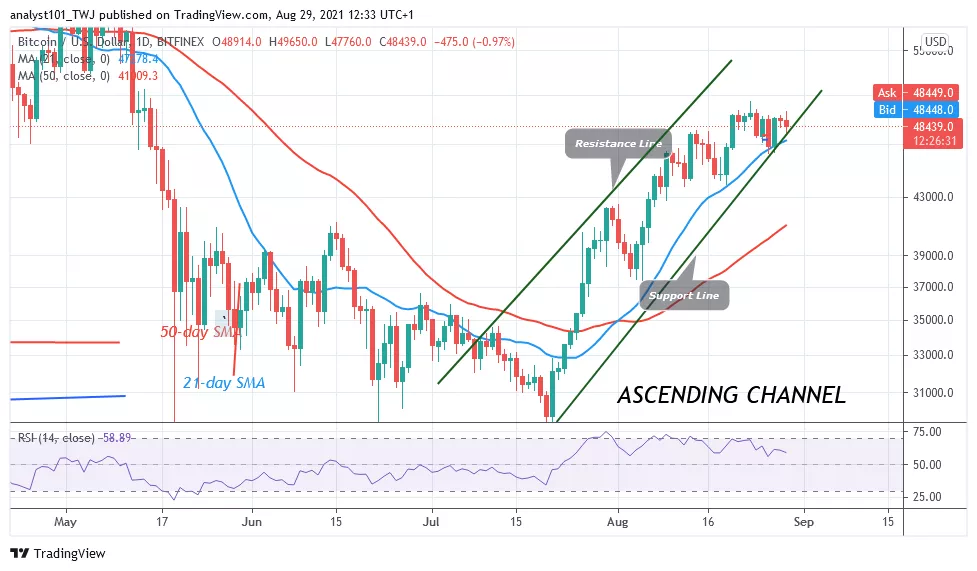









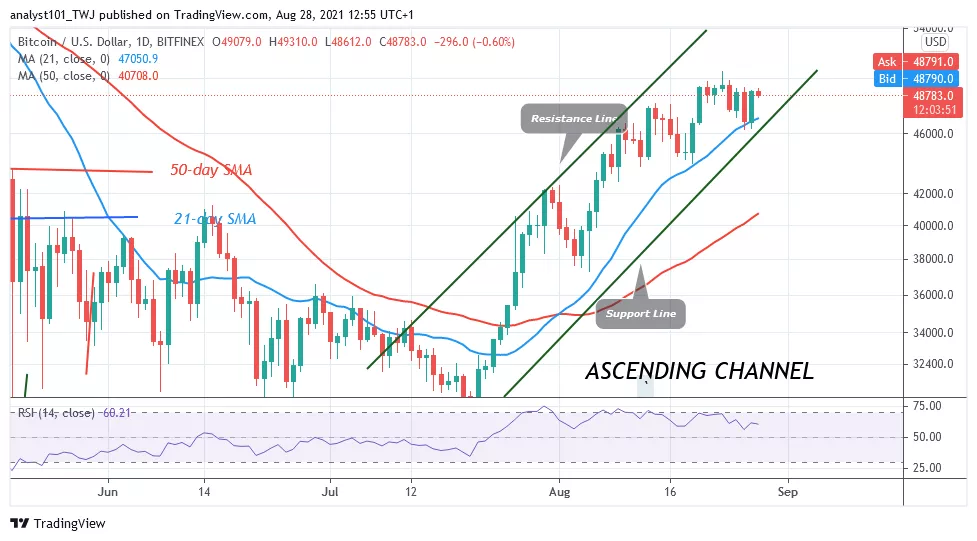


No comments:
Post a Comment